

Part 1 – Motivation
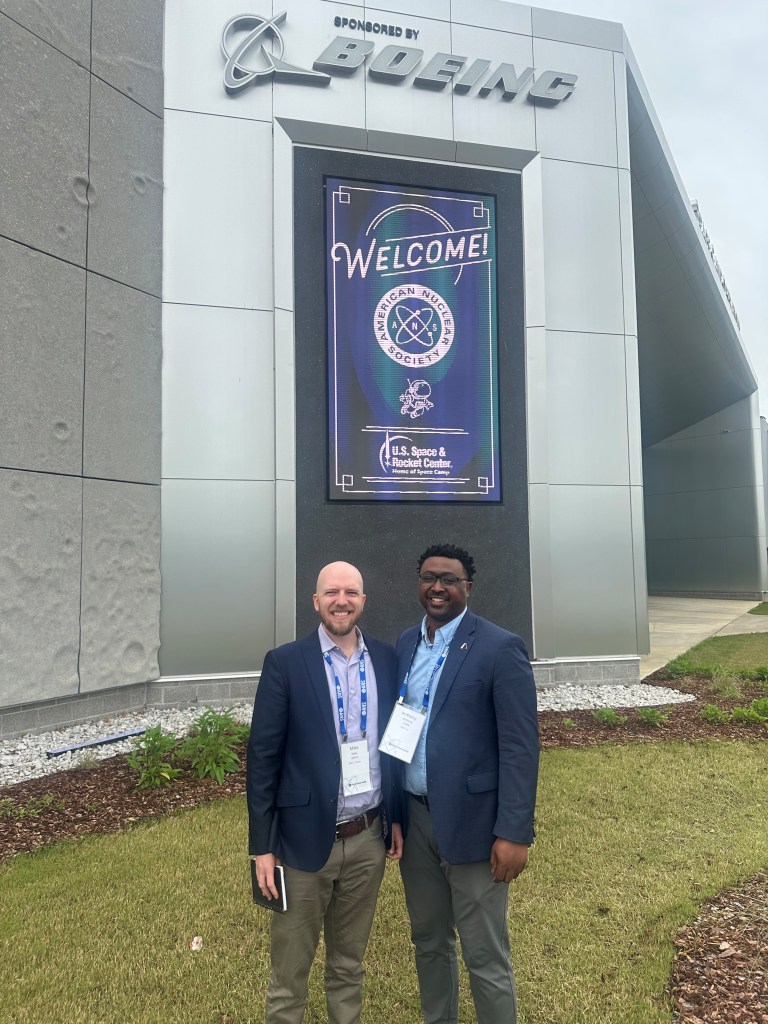
Ever since my grandparents first pulled out the “outer space” placemats I’ve had a healthy interest in the stars. After attending a couple of NETS conferences, hosted by the American Nuclear Society, I seized an opportunity to make my own contribution to the space industry by modeling a Nuclear Thermal Propulsion engine in Flownex.
The reason for this effort is two-fold. First, I just wanted to see if it could be done. Second, in my experience at these conferences, lots of really smart scientists and engineers are developing outstanding novel technologies and designs, but spend a large effort solving the thermal-hydraulics of their systems manually or through custom scripted routines. I suspect it would benefit the entire industry if we can enable the scientists to focus on the science by qualifying existing tools (like Flownex) on difficult applications, like nuclear thermal propulsion.
I cleared this effort with my boss and our marketing department, now I needed to find an example. Nuclear thermal propulsion has existed as a theoretical technology for space transport since the 1940s. In ~1955 Los Alamos began development work on NTP engines with Project Rover. Then, in 1960, NASA, in collaboration with the Atomic Energy Commission opened the Space Nuclear Propulsion Office. This brings us to NERVA – Nuclear Engine for Rocket Vehicle Application, which was the child of these organizations marriage and a continuation of the Project Rover effort.
As part of the NERVA project several conceptual NTP engines were designed, built, and even test fired.
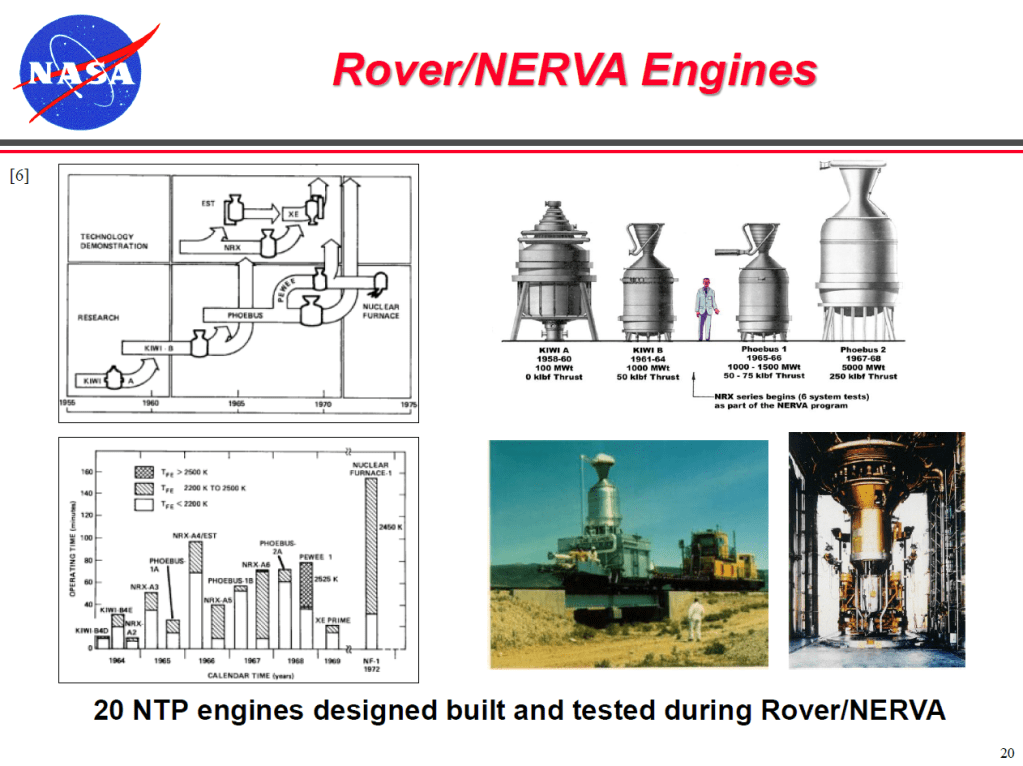
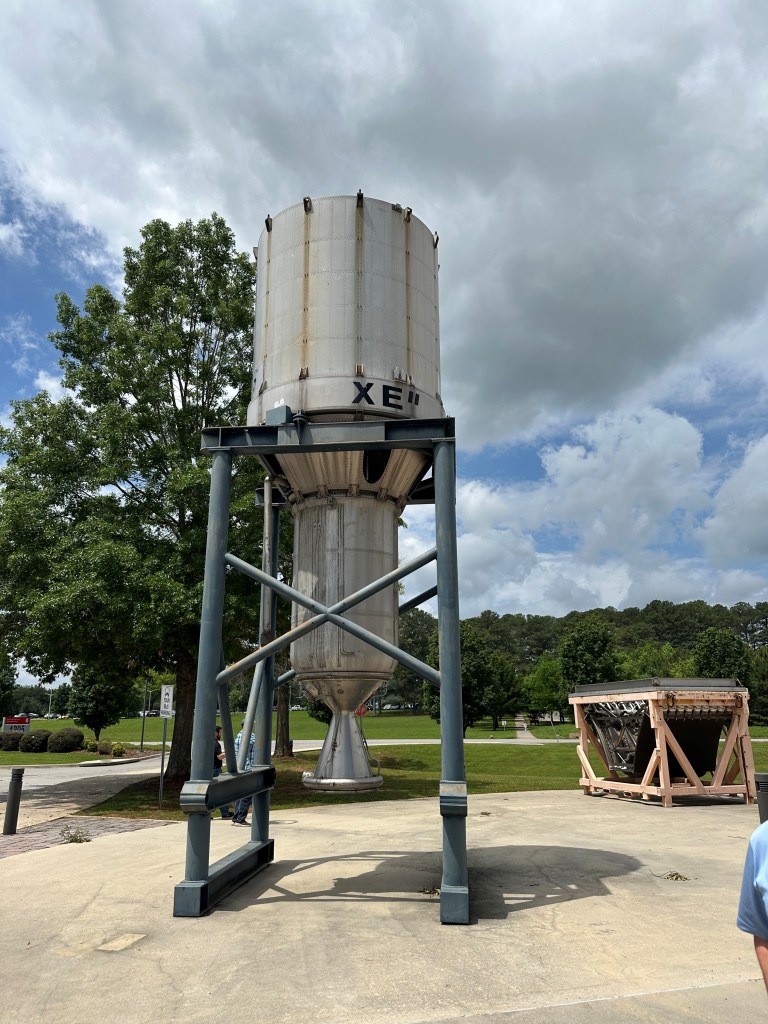
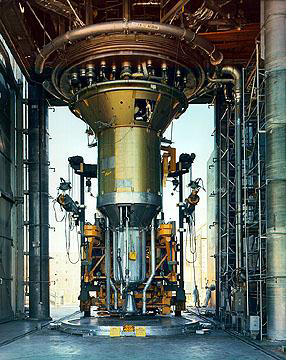
I began parsing through old reports, presentations, and test data. There was a ton of material to sift through. Much of it poorly xeroxed. One of the reports I was interested in was only available as a microfiche scan at a university library. The good news is that filtering through all of the available reports and data, there was a clear choice for an engine which had flow diagrams, geometry, some reactor details, and most important, test results for a range of operating conditions! The Xe-Prime.
 Miles Adkins