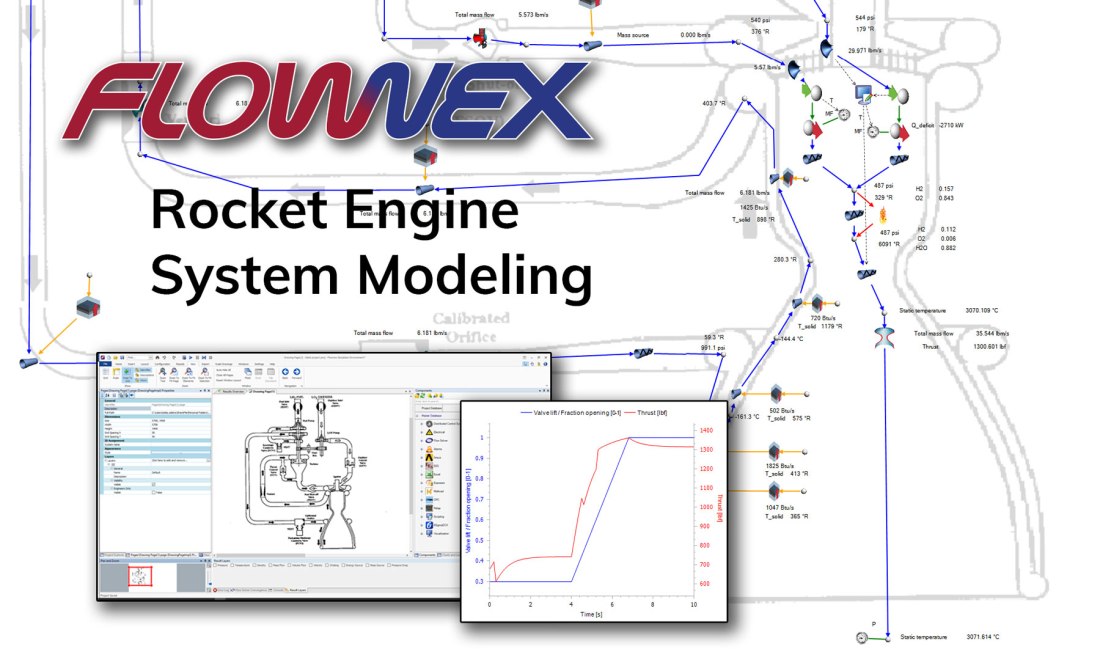
How to use Flow Path Graphs and Increment Plots in Flownex

Flownex Tech Tip #11

Flow Path Graphs and Increment Plots can be incredibly useful visualization tools to see how a simulation result varies as a function of length along the axial flow path and to see a higher fidelity result for a single flow component. Use these in Flownex to up your reporting game! In this demo we are using Flownex version 8.12.7.4334

Creating a Flow Path

A flow path is any continuous series of flow elements and can be created by clicking “Flow Paths” in the results ribbon. Once we’ve created our new flow path we define it by choosing our start and end nodes.
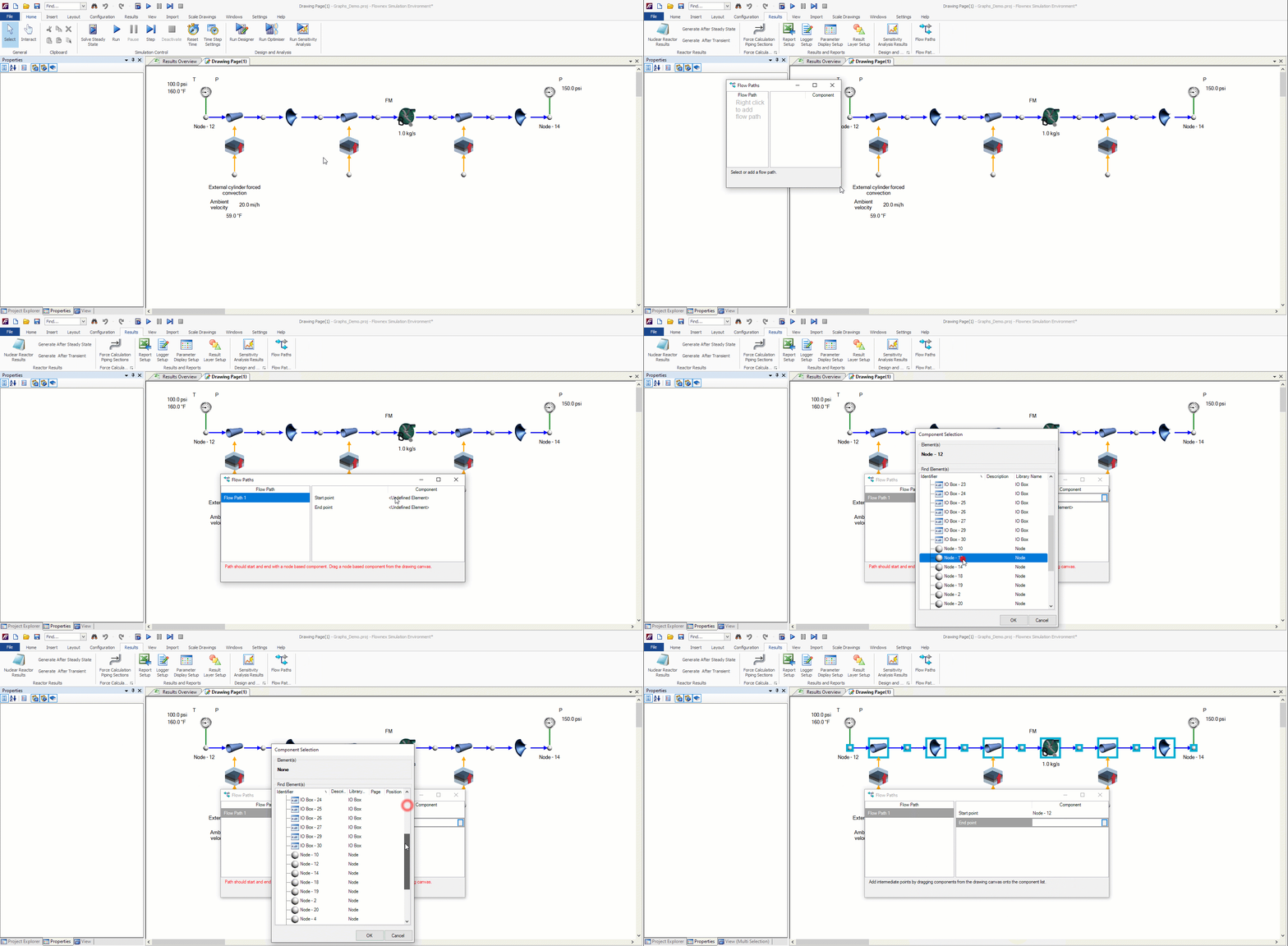
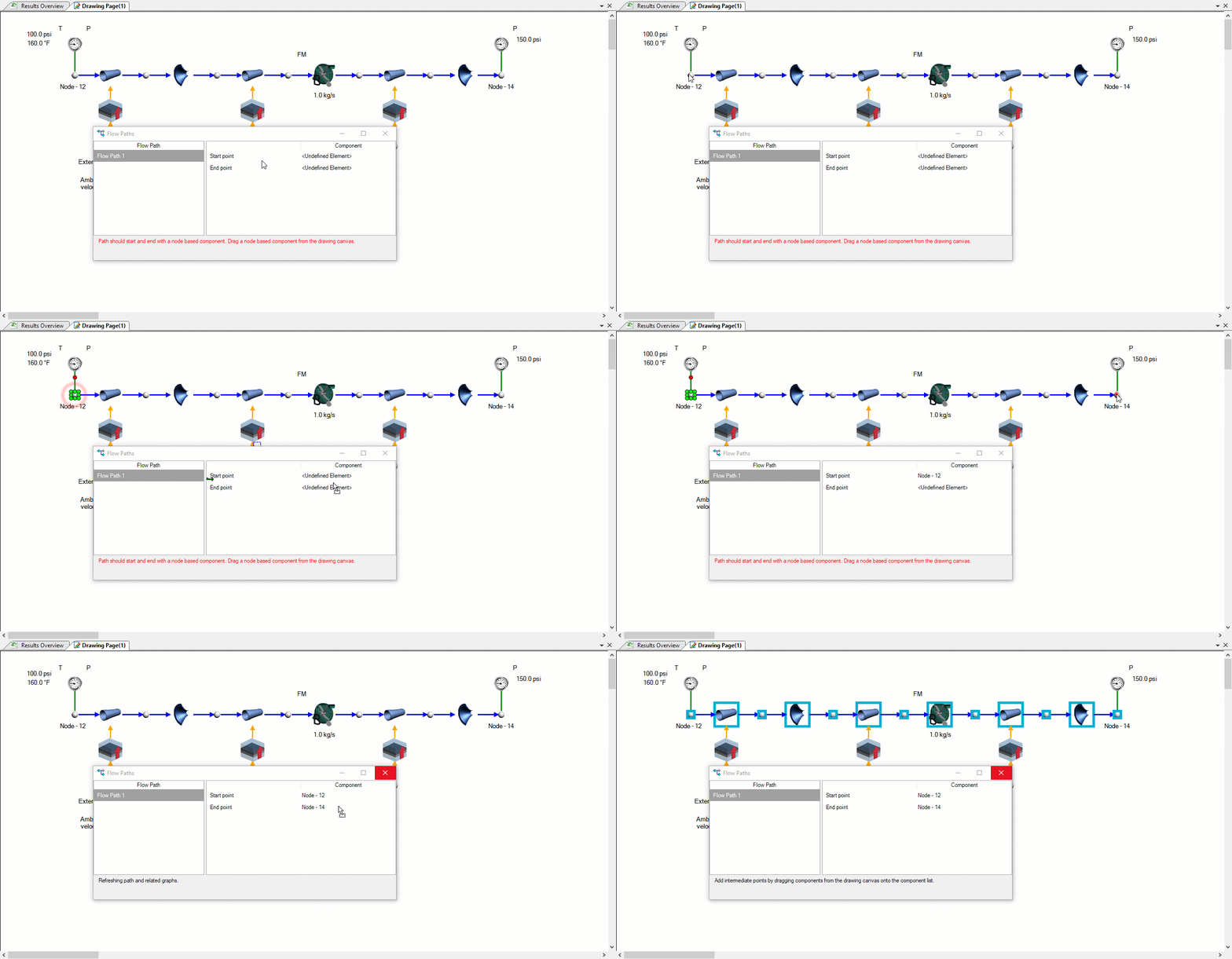
Another, simpler, method is to simply drag and drop the nodes onto the flow path start and end point:
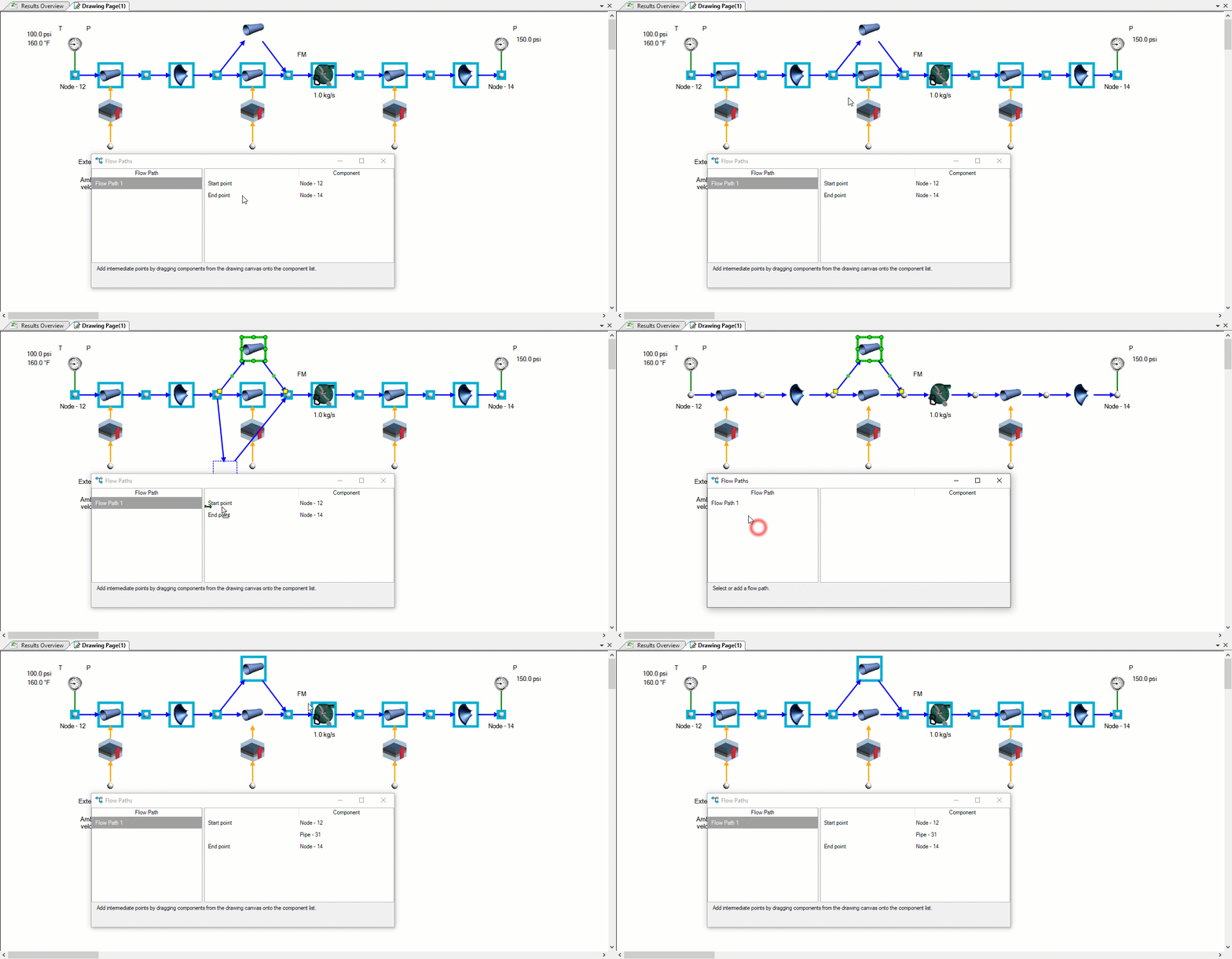
If we have a branched network we can add an intermediate node or flow component to our flow path to ensure the correct path is captured in the graph:
Insert a Flow Path Graph

The Flow Path Graph is in the component pane under visualization > graphs. Once the graph is added to the canvas we simply need to drag and drop our newly created flow path onto the graph and choose the characteristic we are interested in plotting. We will need to drag and drop the flow path for each characteristic we would like plotted.

How to create Increment Plots

You may have noticed in the previous images that there were many data points on the graphs for each of our flow components. This is because we had each pipe modeled as 25 increments. When we add increments to our flow components Flownex will treat each component as if it were split up that number of increments – solving the conservation equations for each increment rather than once over the entire component. This is helpful when modeling long pipes, capturing pressure waves, or determining exactly where a phase change may happen. A good way to think about this is that it is essentially the same as refining a mesh in a typical finite element analysis.

There is another plot in Flownex we can use for a single flow component that has been incremented. The increment plot is located in the components pane under Visualization > Graphs > Increment Plots. If we were, for example, trying to plot the inside surface temperature of our first pipe in this example network we could use an increment plot to see what is going on.
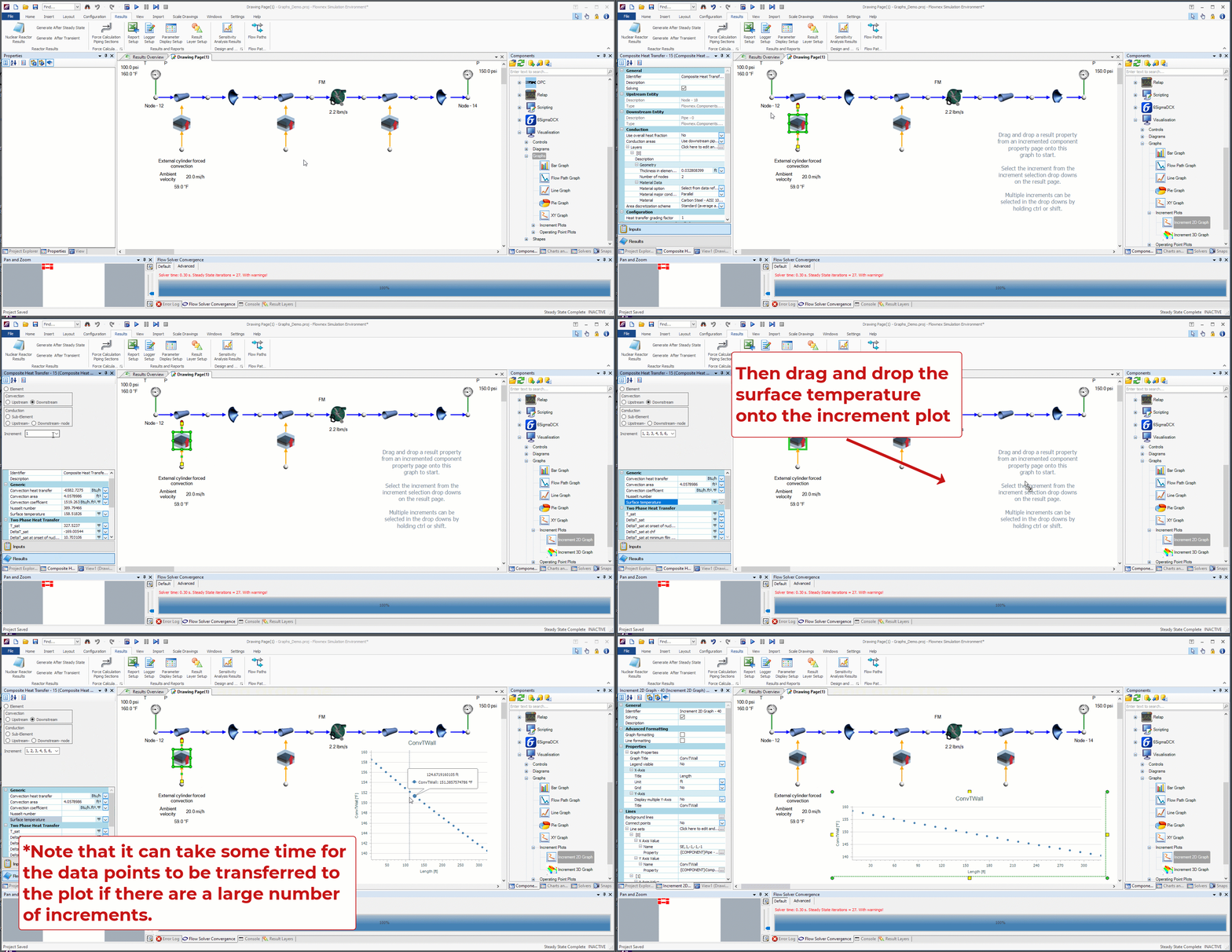
To create an increment plot we simply drag and drop the plot onto the canvas. We can either selectively drag results from individual increments or multi-select many increments and drag the desired variable onto the graph. Note that since there is a tie of each increment parameter separately there may be some delay if we are multiselecting a very large number of increments.

Bonus Tips!

  • We can use a Flow Path Graph for a single component to avoid having to multi-select increments.
  • To create a graph on its own page instead of floating on the canvas go to the Project Explorer pane on the left side of the GUI, select Graphs, then right-click on the Graphs Folder and select Add Graph Page and choose your desired type of plot.

Rotor-Rotor and Rotor-Stator Cavities in Flownex

Flownex Tech Tip #10

Happy Friday! In today’s tech tip we’ll introduce the rotating components library and demonstrate how to utilize the cavity drawing tool for rotor-stator cavities which can be a huge time-saver when building secondary flow networks. We are working with Flownex version 8.12.7.4334.

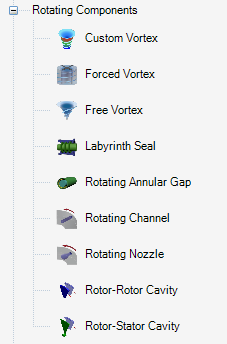
Rotating Components

One common implementation of rotating components in Flownex that I see is for modeling secondary flow networks for gas turbines. These flow paths are also sometimes called secondary air systems. What this refers to is the flowpath separate from the primary flowpath (Secondary, get it?). This is flow used to cool equipment, shrouds, discs, vanes, and to provide buffering for the seals to the oil system.

https://flownex.com/industries/gas-turbines/

Flownex has a whole library of rotating components that come in handy when building these secondary flow networks. These are well documented in the Flownex help manuals if you’d like to read up on technical specification, inputs, results, and theory.

  • Custom Vortex
    • A custom vortex is used when velocity profile is between that of a forced vortex and free vortex.
  • Forced Vortex
    • In a forced vortex the fluid moves similar to a solid body with constant angular velocity.
  • Free Vortex
    • Free vortex swirl is calculated using mass flow rate average of the incoming swirl streams, swirl is constant over the radius; usually used for rotating fluid in an open cavity.
  • Labyrinth Seal
    • Used for modeling axial and radial straight and staggered seals.
  • Rotating Annular Gap
    • Used to model flow through an annulus with the inner or outer cylinder rotating.
  • Rotating Channel
    • Used for flow inside channels in rotating discs and blades.
  • Rotating Nozzle
    • Similar to a stationary nozzle where there is a discharge coefficient as a function of the inlet type.
  • Rotor-Rotor Cavity
    • Used when calculating swirl ratio from moment balance on the the rotor surfaces, bolt heads, and flows.
  • Rotor-Stator Cavity
    • Used when calculating swirl ratio from moment balance on the the rotor and stator surfaces, bolt heads, and flows.

Cavity Drawing Tool

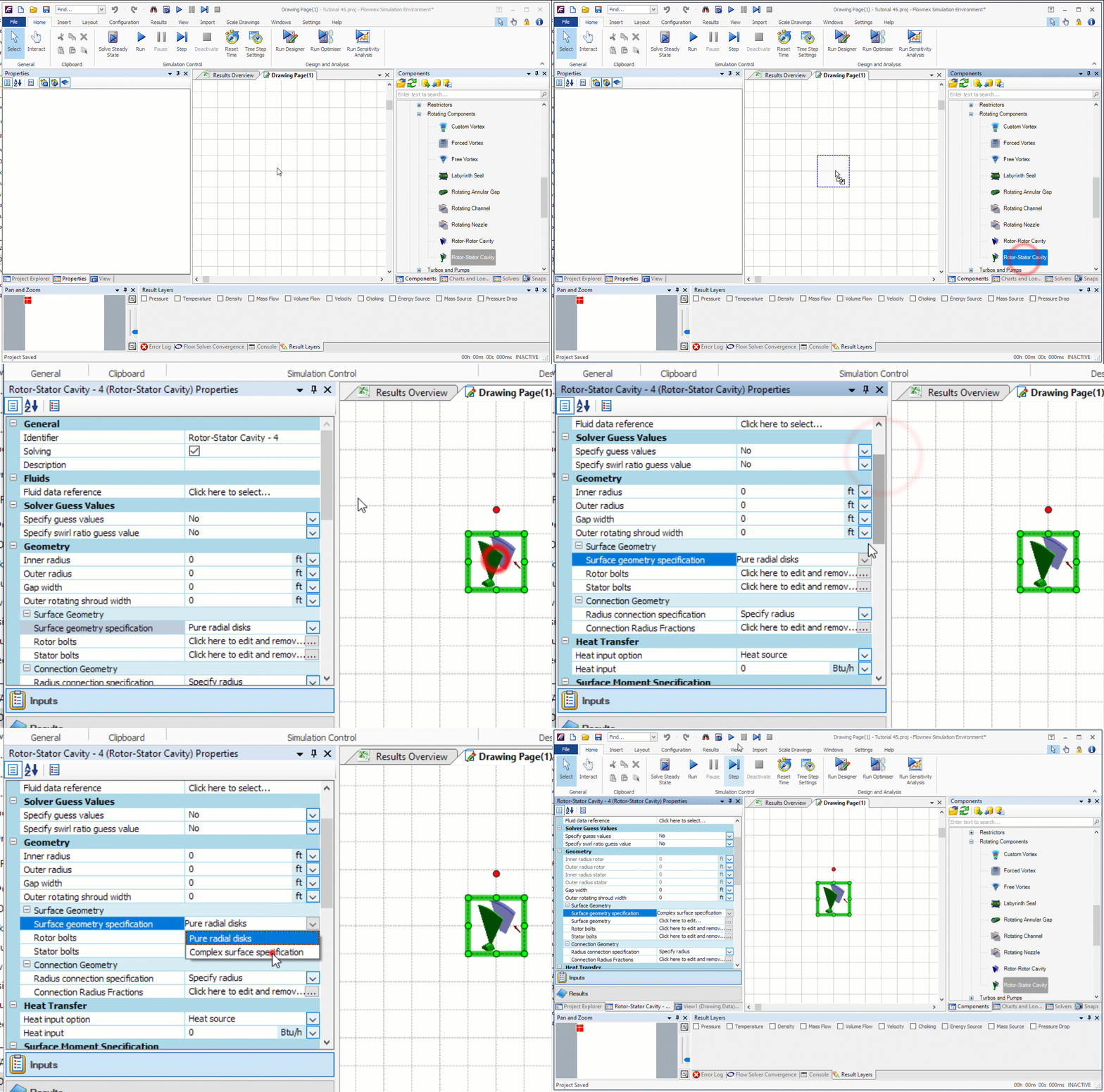
Now we get to the nitty gritty of todays tip; how to utilize the cavity drawing tool. When we use either a Rotor-Rotor component or a Rotor-Stator component there are two options for specifying the surface geometry. We can either model as pure radial disks, or as a complex surface specification.

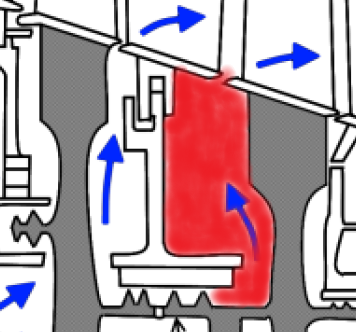
We can use the complex surface specification option to model a rotor-stator cavity like in the cross-section below. When using this option we will need to get a cross-section like this from CAD or from a scaled technical schematic.

To specify this surface geometry we will click the radio button next to surface geometry and add our image to the project. For a refresher on adding an image to your project check out the blog post on adding a background image.

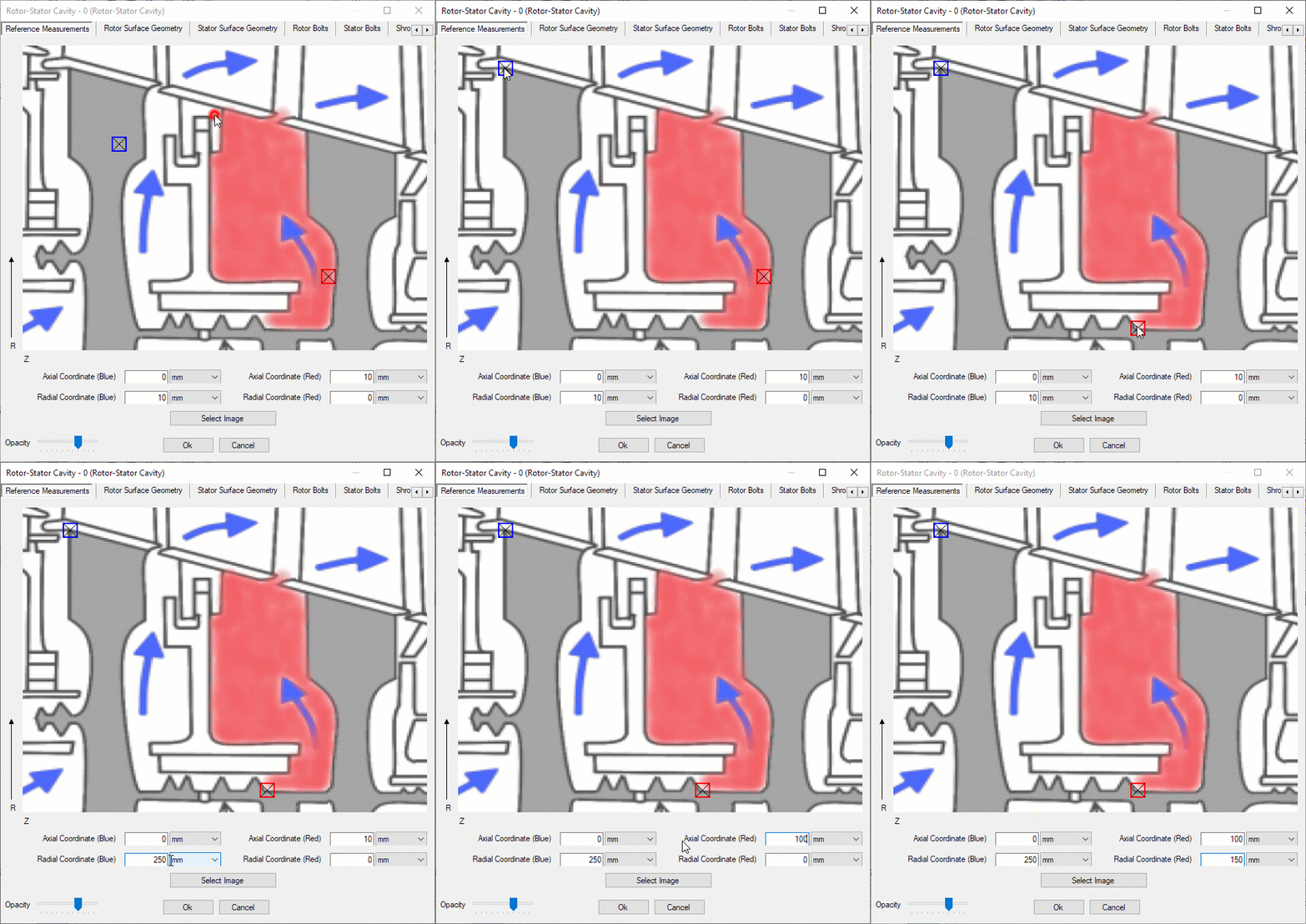
Reference Measurements

We will first need to specify our reference axial and radial coordinates. This is done by dragging the red and blue boxes to known locations on the cross section and entering in the values in our desired units.

Surface Geometry

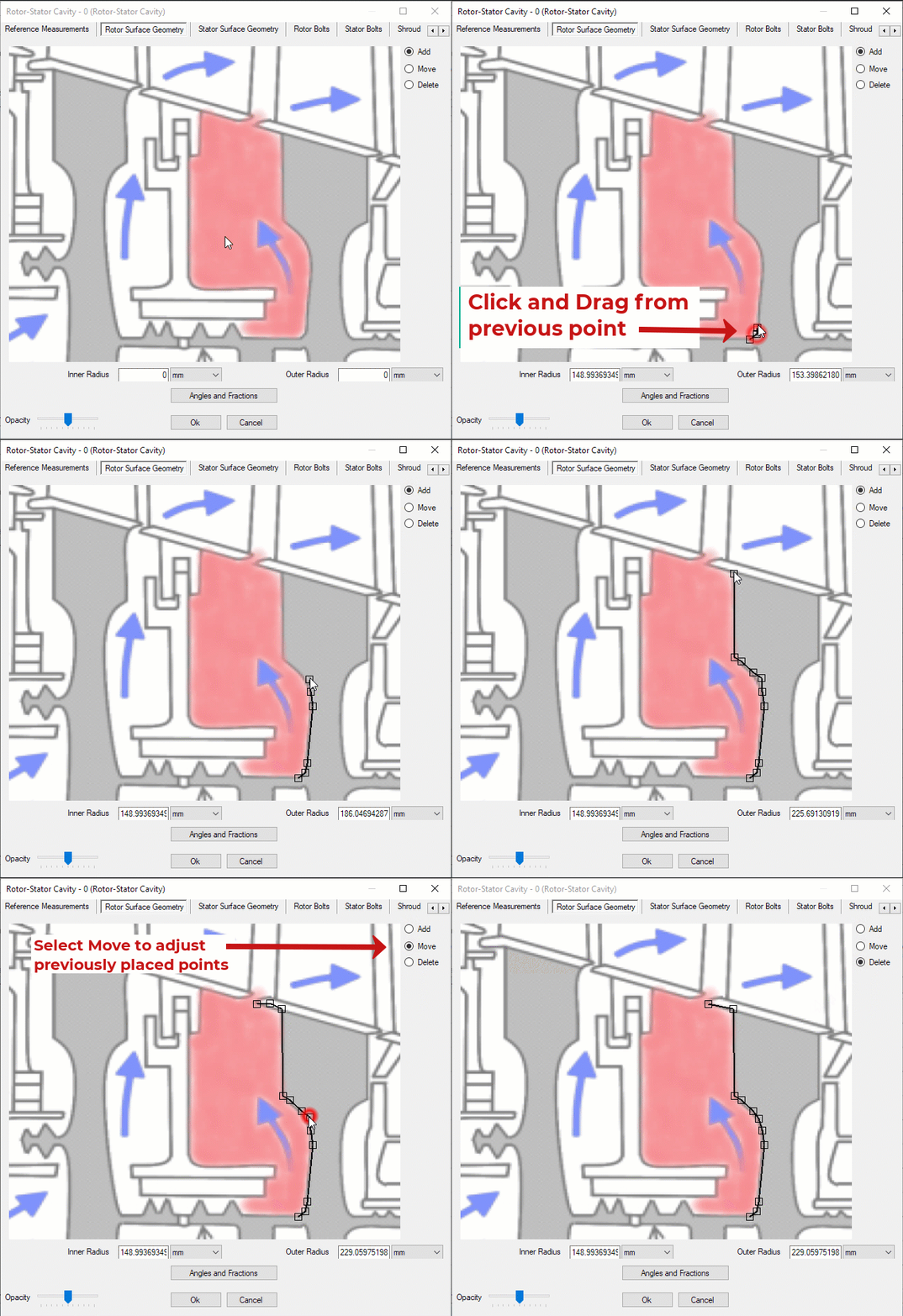
Now that we have specified the reference measurements we can define our rotor and stator surface geometries. This can be done in the Rotor Surface Geometry ribbon and the Stator Surface Geometry ribbon. The mode in the top right of the GUI lets us know if we are adding points, moving points, or deleting points. To add points we will click and drag from the previous point.

You’ll notice the inner and outer radius fields are automatically updated. This can be a good way to sanity check against known measurements or against CAD. We will need to do the same thing for the stator surface geometry.

Bolts

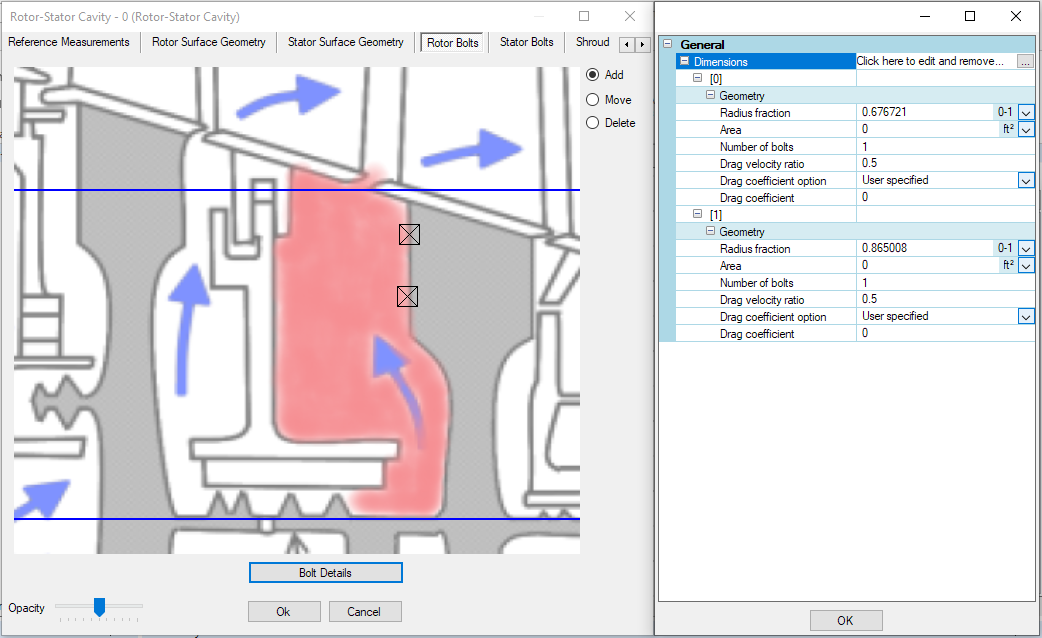
If there are rotor or stator bolts they may be added in their respective ribbons. The blue lines we see in these images represent the limits of the rotor or stator surface. If bolts are added we will need to click Bolt Details at the bottom of the window and add bolt geometry. The radius fraction is populated automatically and the other inputs will need to be updated as needed by the engineer.

Cavity Shroud

If we need to model the cavity shroud this can be done in the shroud ribbon. In our demonstration today the shroud is included in the rotor and stator surface geometries. For this case we can de-select specify shroud width.

Gap Width

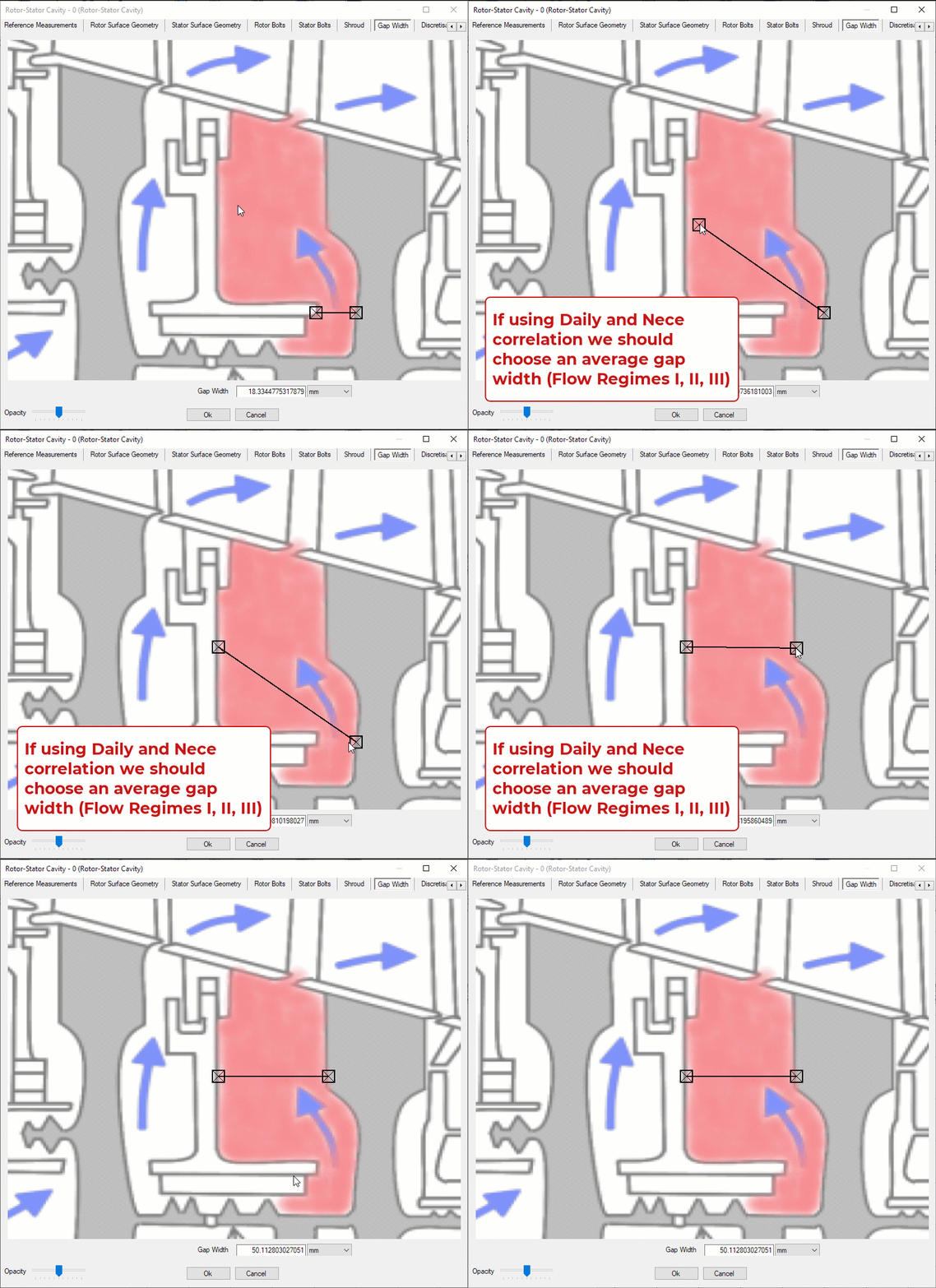
Next we must specify the gap width. To understand what appropriate width to specify we must dive a little bit into the theory.

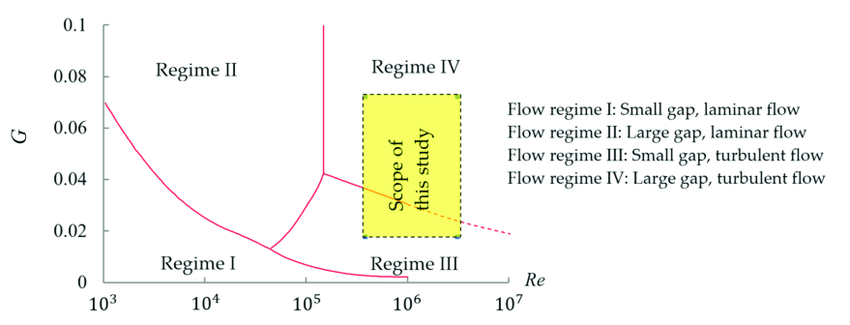
Flow regimes for rotor-stator cavity flow can be classified by the following image:

“G” being the gap width ratio (s/a where s is the gap width and a is the outer radius of the cavity) and Re is the Reynolds number for cavity flow. Essentially there are four regimes which are determined by the Reynolds number and gap ratio.

Flownex uses correlations from Haaser et. al (1987) and Daily and Nece (1960) to calculate the required moments produced by the rotor or stator on the fluid within the cavity. Haaser et al. is valid for Regime IV whereas Daily and Nece is valid for 0.0127<=s/a<=0.217 and 1000<=Re<=1e7. It is suggested to use Haaser when the flow is in Regime IV and Daily and Nece when the flow is within the other regions.

I hope I haven’t lost you.

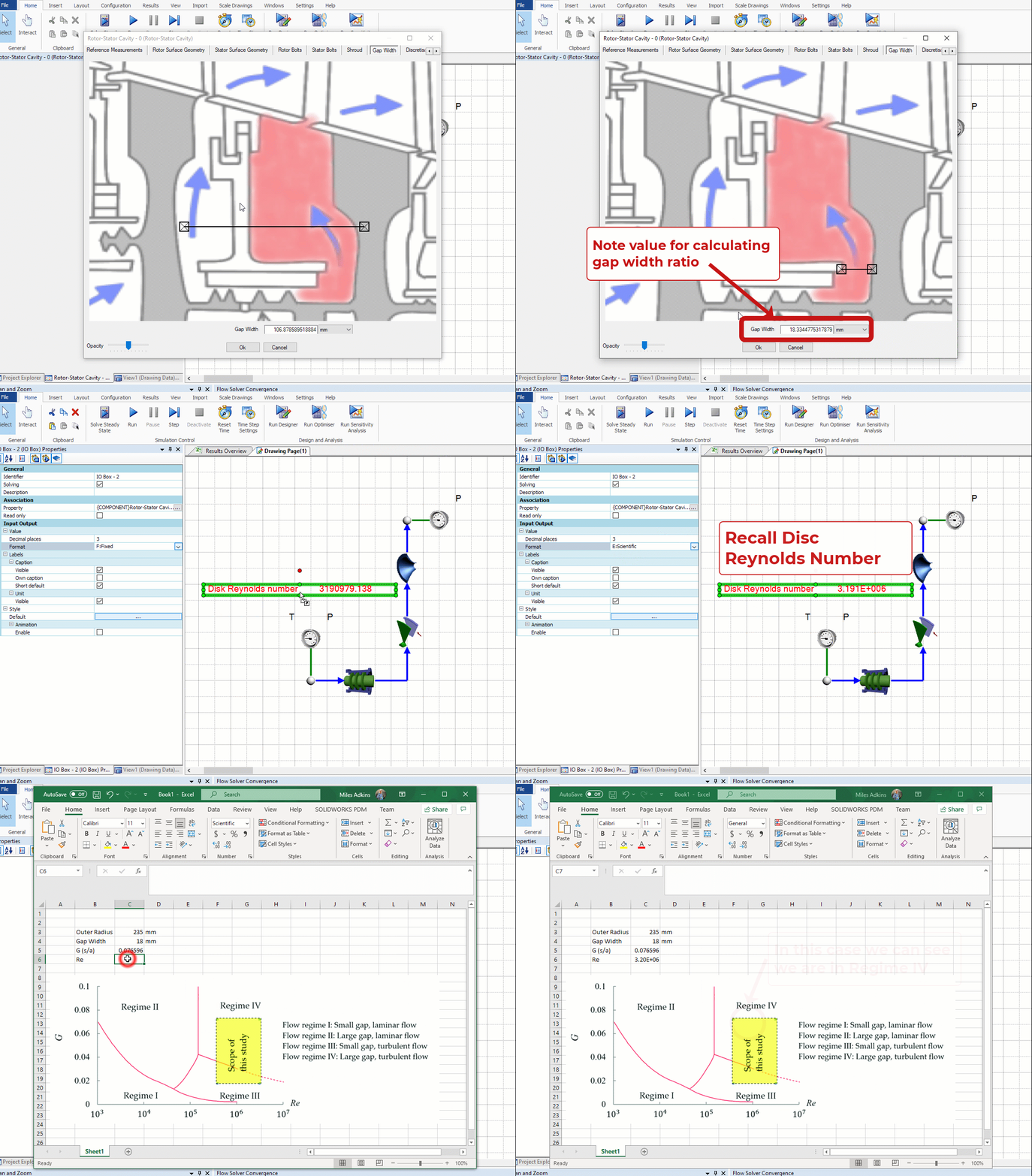
So, for complex geometry (not just two flat surfaces) it is recommended to use the smallest gap width first and calculate the disc Reynolds number. Using the smallest gap width gives you the smallest gap width ratio which will lower the point at which your fluid is in the flow regimes graph above. Now check in what region you are. If your Reynolds number is high enough to be in region IV, and while using the smallest gap width your are still in region IV then it is safe to say that your entire flow will be valid when using Haaser. If this is true, you can then use the smallest gap width because the correlations of Haaser is not dependent on gap width. Using the minimum gap width essentially allows you to make sure that your entire flow is within regime IV. When you have used the smallest gap but see that your gap width ratio and/or Reynolds number leaves you in a different regime (I,II or III), we will then suggest that you calculate the moments using Daily and Nece.

To summarize, start with the smallest gap width and determine the Flow Regime:

If we are in region IV for the smallest gap width then we can leave the gap width as originally specified. If we were in any other region we should change our gap width to be an average:

Don’t forget to choose the appropriate correlation in the inputs for your rotor stator component as well. Big thanks to Leander Kleyn at Flownex for helping me understand the theory behind the gap width!

Discretization of the Cavity

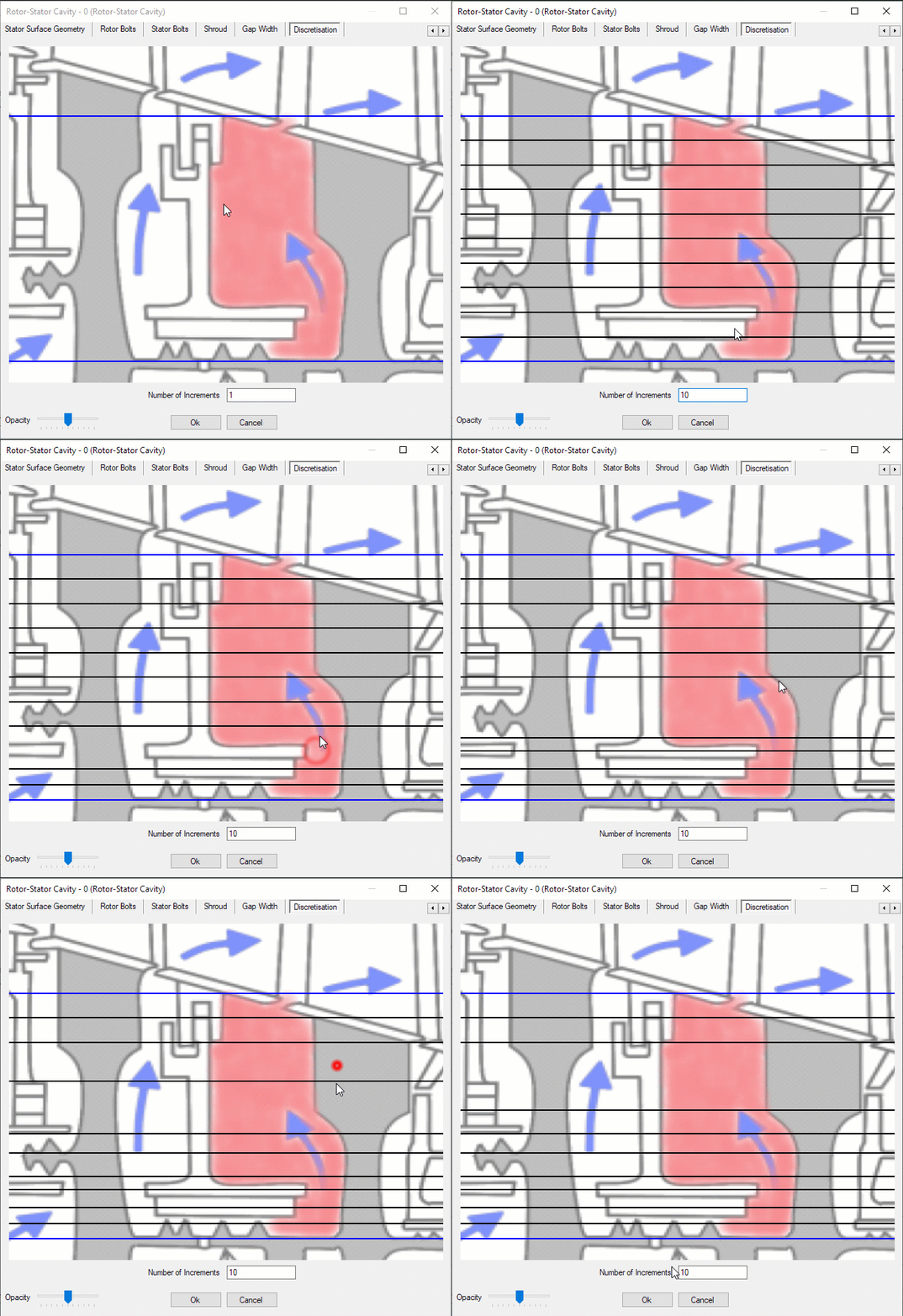
Lastly, we need to assign the discretization of the model. This can be thought of as sort of refining the mesh of the cavity. We can specify more or less increments and can drag the increments around to be sure to capture changing geometry.

There you have it! A complex surface specification of a rotor-stator cavity using the cavity drawing tool in Flownex!

Setting up an External Shared Database in Flownex

Flownex Tech Tip #8

Hi Folks! Another short and simple tech tip this week; How to set up an external shared database in Flownex. When working as part of a team it makes sense to share resources. Once one person builds a custom component or defines a complex fluid we want to share that with everyone in our organization. Today I will show you how to create and maintain a shared database. For todays example we are working in Flownex version 8.12.7.4334

Creating the Database

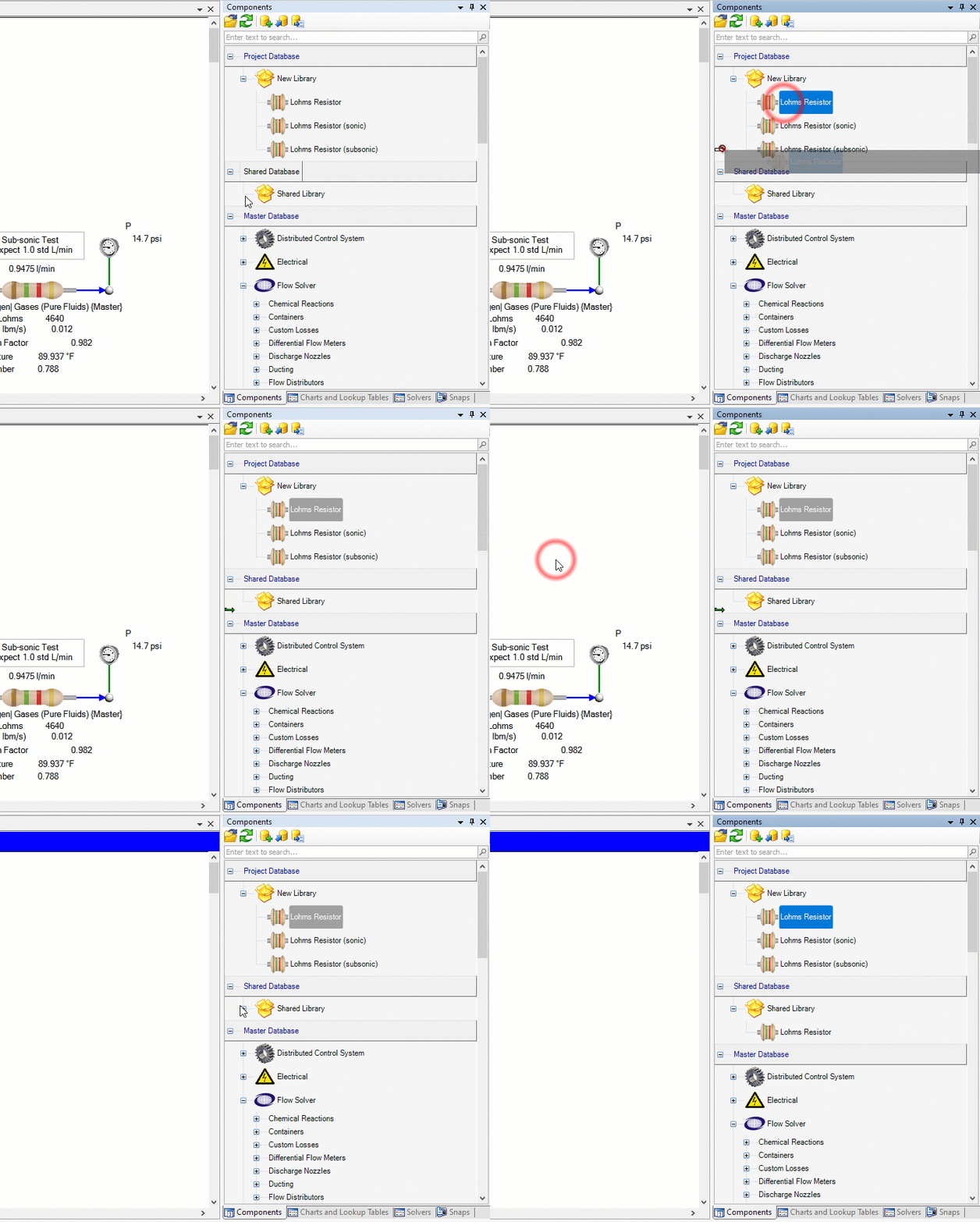
Start by opening up Flownex – it can be a new project or any existing project. On the right side of the GUI we’ll want to navigate to the Components pane. At the top of the pane you’ll see a variety of buttons. Depending on your installation the buttons you see may be different than the ones in the visual below. To create a new database we’ll want to click the Create Database icon.

Then we’ll want to navigate to a shared network location and pick an appropriate folder that will be accessible to others in our organization. I would encourage keeping the directory name as short as possible (I.E. a top level location) so that there is no concern for a deep database hitting windows character limit.

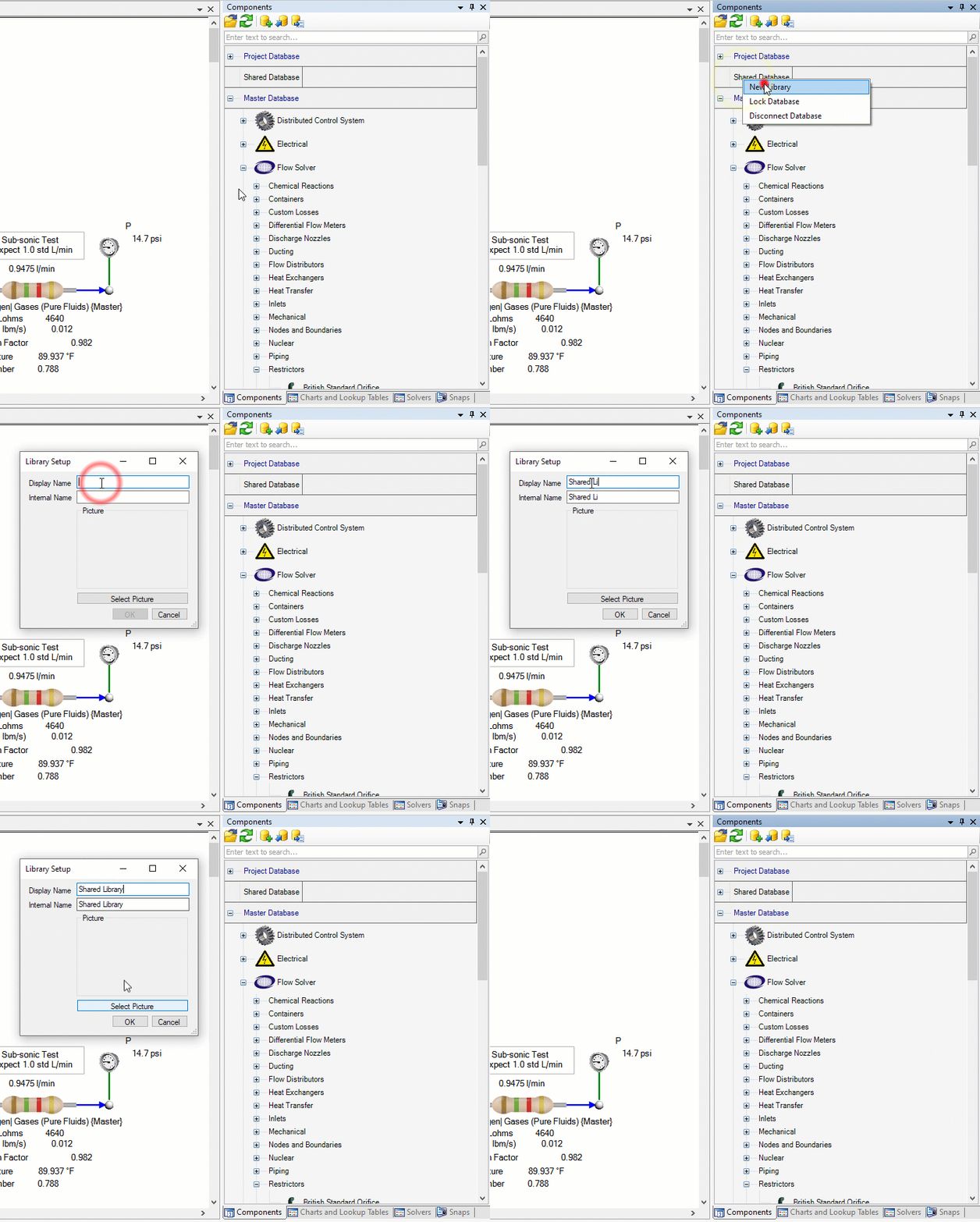
Once we have chosen a location and clicked OK we will see our shared database in both the Components pane and in the Charts and Lookup Tables pane. We’ll need to right-click on the newly created shared database and create a New Library in which we will place our shared components. Creating multiple libraries can be useful when grouping similar components or to discretize between different groups in the organization which are using Flownex.

Adding components to an External Database

To add custom components to our external database we simply drag and drop them from our project database. If you want to learn how to create a custom compound component please reference our previous blog post on this topic here. Choosing “Copy” will create a copy of the component in the shared database, choosing “Move” will move the component to the shared database and any references to that component in the project will now reference the component from the external database.

Adding a fluid to an External Database

To add a custom fluid to our external database the process is very similar to the procedure for the custom compound component. The only difference is that we want to do this drag and drop action within the Charts and Lookup Tables pane instead of the Components pane. If you need a refresher on creating or importing custom fluids here is a blog post on that topic!

Connecting to an External Database

Once a user has created a shared database it is now possible for other users to connect to that database. the process of connecting to an external database is quite simple. On the Components pane we will again look at the buttons near the top. We will want to click the Connect Database icon and then navigate to the shared location of the external database. Once there we will find the database configuration file, .dbcfg. We should select this file and click OK. You are now connected to the shared database!

Bonus Tips!

  • To lock an external database to avoid unintentional editing you can right-click on the database in Flownex and select “Lock Database”.
  • If you need to migrate the database to another location on your server you can copy the entirety of the folder and move it. Users will simply need to follow the same procedure of connecting to an external database the next time they open Flownex.
  • Special Note: If sending a network to someone external to your organization it is important to note that components or references from external databases will not be included by default. These components or charts will need to be copied to the project database and then the shared database will need to be disconnected before archiving the project for transfer. A second option would be to share the database itself.

How to Use Views to Bridge Networks Across Multiple Pages

Flownex Tech Tip #7

When building our networks it may be necessary to utilize multiple pages for a single network. This could be simply because our network is large and complex, or because it simply makes sense to keep certain branches or processes separate. In this tech tip we will show how to use “views” to continue networks across multiple pages. For this example we are using Flownex version 8.12.7.4334.

Views

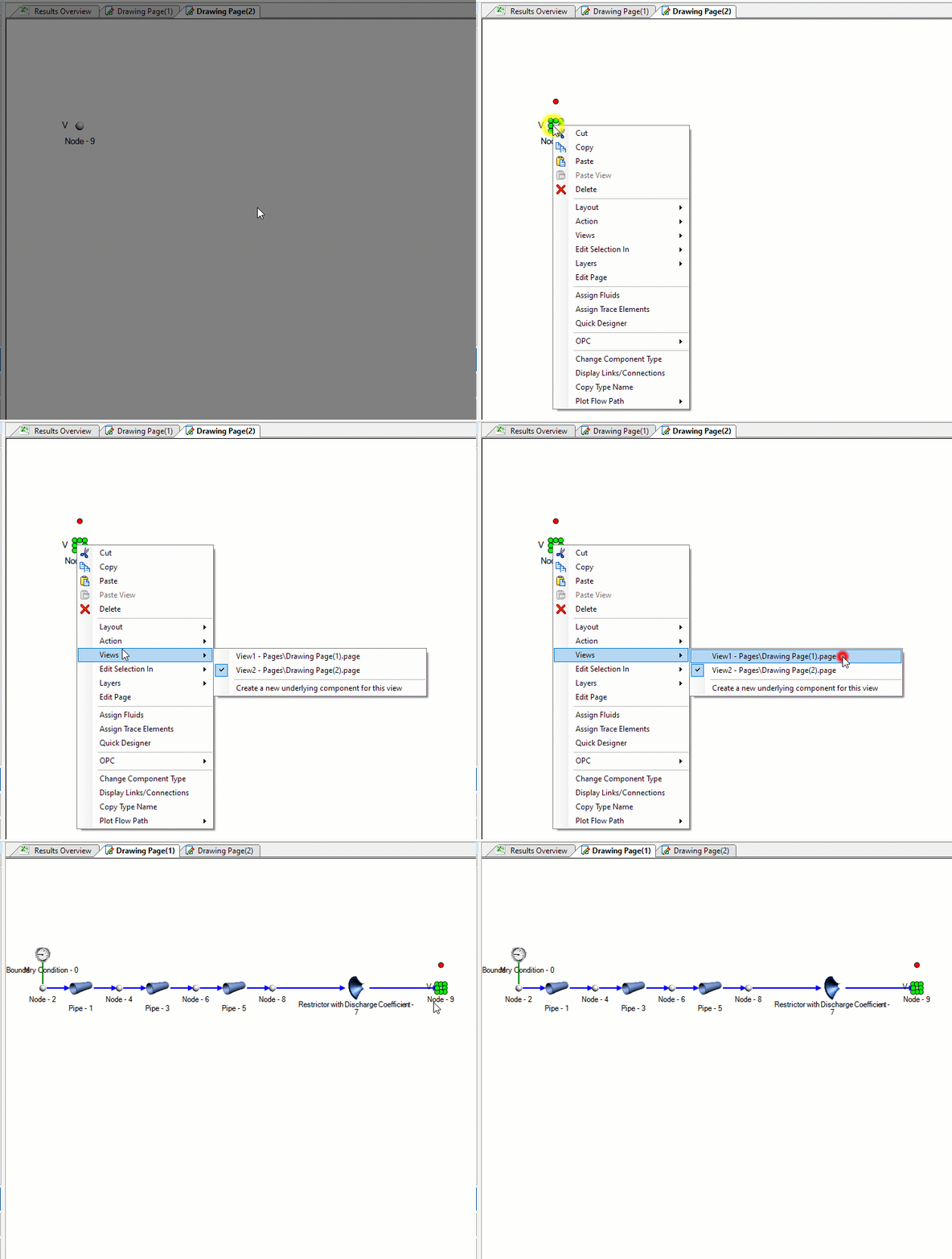
In Flownex the way that we continue networks across pages or even just jumping across portions of the same page is through the use of “views”. To create a view we right-click on the component we’d like to use as our bridge and select copy. Then navigate to where we’d like to continue our network and right-click, “paste view”.

Note that this is not really a “copy” of the previous node; it is another instance of the exact same node. I personally recommend using nodes for views over flow components so that they are less likely to be mistaken as separate components.

Regarding views

A couple of things to note regarding view components. First, you’ll notice the floating “V” to the left of the component. This indicates that the component is a view. It’s a good idea to leave this layer on – if for some reason you cannot see the “V” it can be turned on under the view ribbon:

Secondly, to find out where the views are located in your network the simplest way to jump between them is to right-click on an existing view and select the “views” option. Here you can navigate to any other views by simply clicking on them. Note that you are not limited to only two instances of a node (two views). There could be many instances across many pages.

Common uses of views could be to connect networks built by different engineers, connecting different subsystems that make up a larger network, or even capturing 3D network layouts by building a portion of the network in the x-y plane and using a view to connect to part of the network built in the z-y plane.

Creating a Custom Fluid in Flownex

Flownex Tech Tip #6

Occasionally glossed over, adding custom fluids is a fairly standard operation in Flownex that we don’t think about until it’s necessary. There are a couple of ways to do this which we’ll go over in today’s post. I am working in Flownex 8.12.7.4334.

Creating a mixed fluid

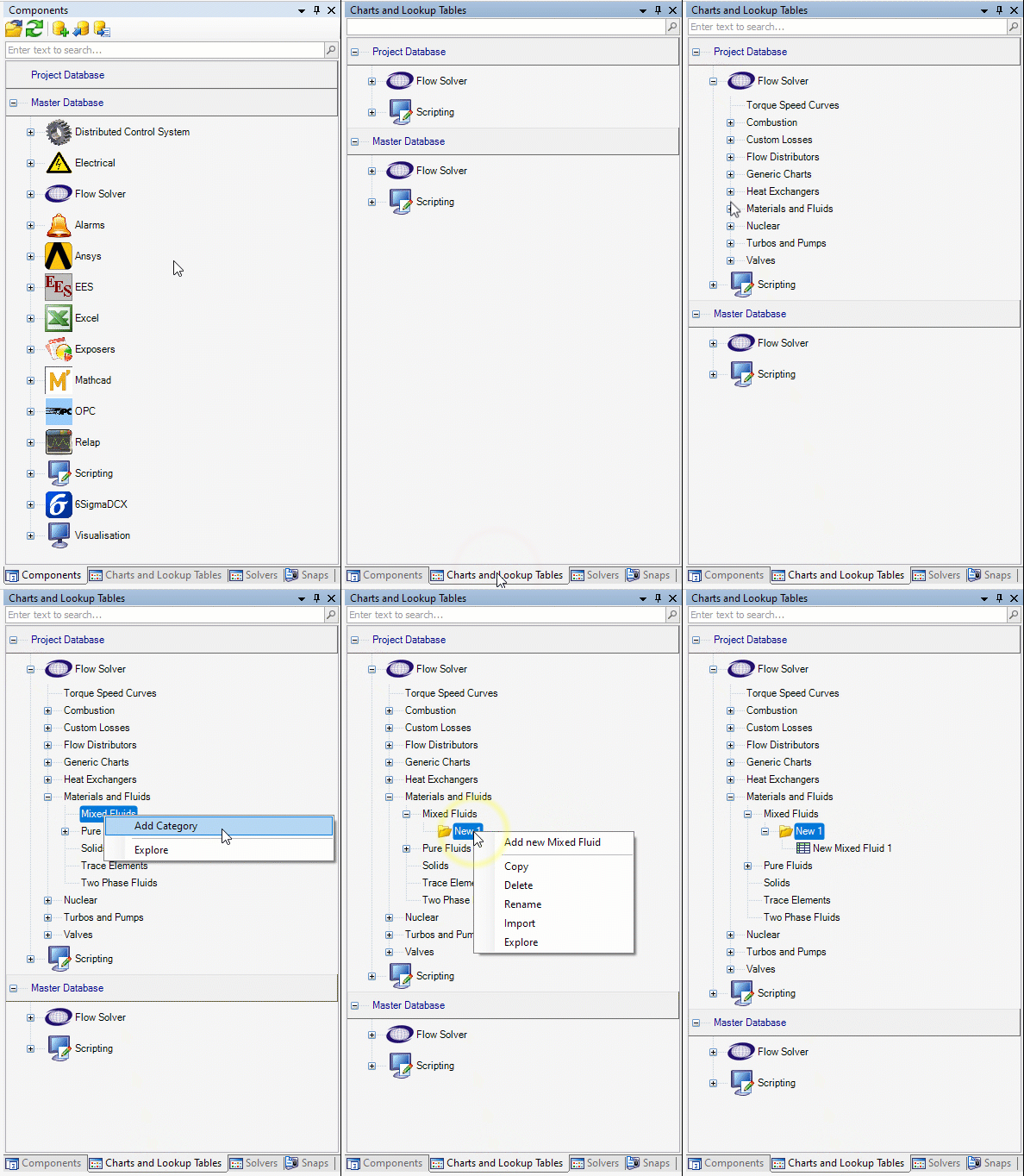
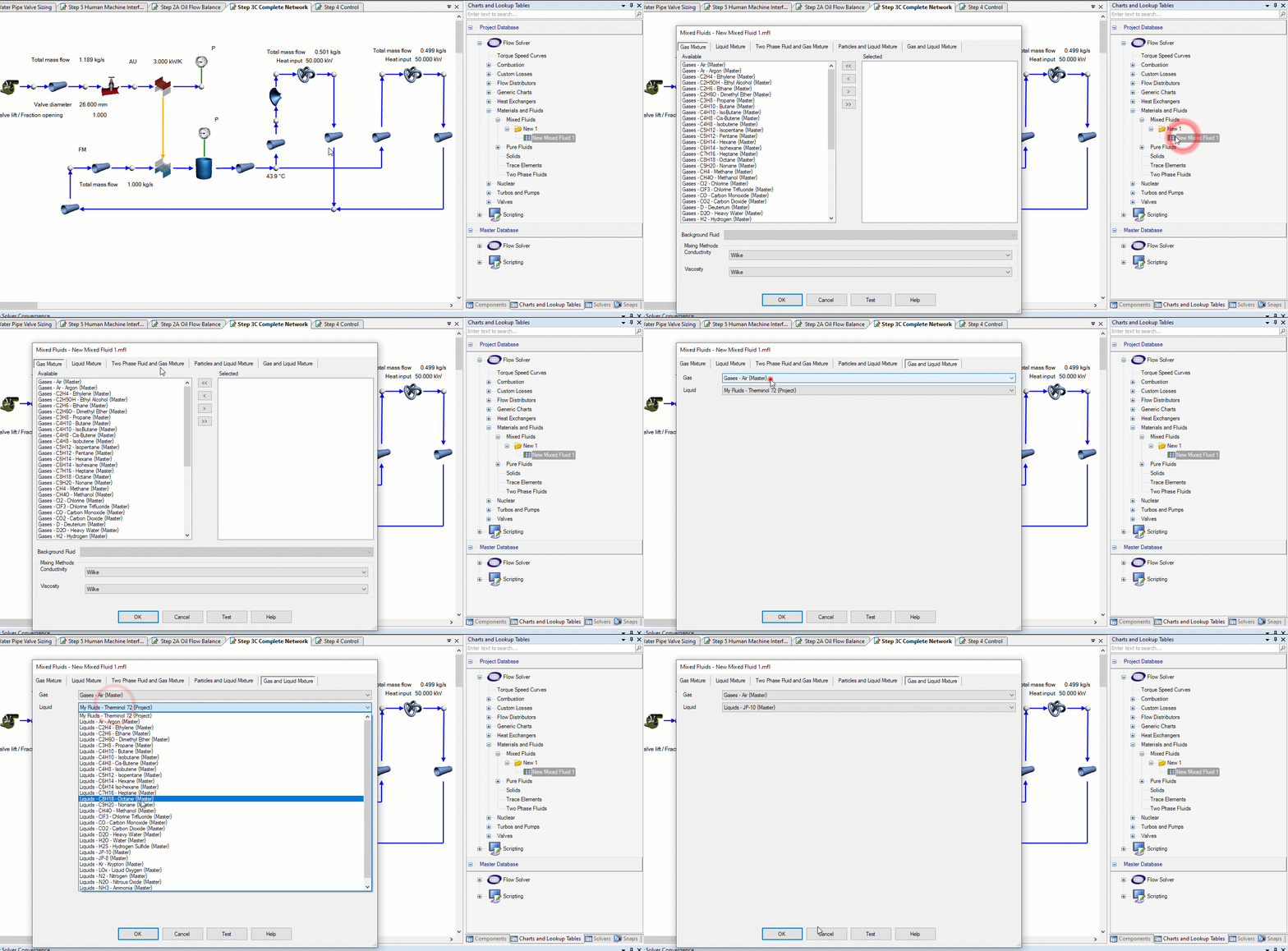
To create a mixed fluid we first need to create a folder for this fluid in our project database. This can be done in the charts and lookup tables pane by right clicking on “mixed fluids” and selecting “add category”. We can create our new fluid by right-clicking on the new folder and selecting “Add a new mixed fluid”. Note we can right-click and rename both the fluid itself and the containing folder.

To define our new mixed fluid we double-click on the new mixed fluid to open the editor. Here we can add the components of our mixed fluids.

Creating a new fluid from scratch

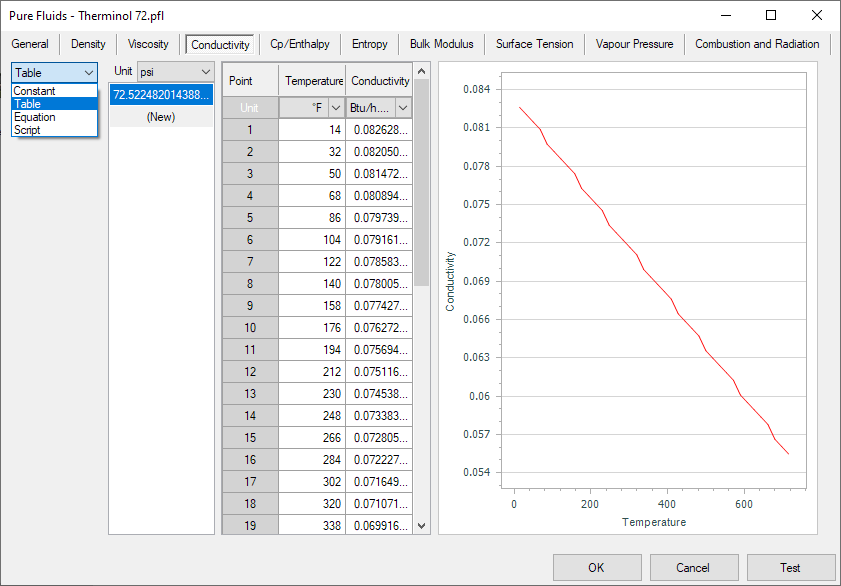
To create a fluid from scratch we repeat the same process of creating a folder and creating a new fluid as above with the exception being that we’d complete these steps under the “Pure Fluids” category. Once this is done we’ll need to double-click or right-click > edit our from scratch fluid and enter in the fluid properties. Note for many properties we can define the relationship with pressure and temperature as constant (non-dependent), table, equation, or script.

Importing a fluid

To import a fluid we will follow the same steps of creating the folder under pure fluids. Now instead of right-clicking and adding new we will right-click and select “import”. Then we simply navigate to our desired fluid file and click “Ok”.

Bonus Tips!

  • In the window where you define your fluid you’ll notice the “Test” button. This feature can be utilized to test created fluids to confirm properties against known properties for given pressures and temperatures.
  • We can also copy and paste fluids from the master database into the project database to give us a good starting point for creating similar fluids (or extending properties to higher/lower temps/pressures).

Custom Result Layers in Flownex

Flownex Tech Tip #5

The result layers in Flownex have evolved quite a bit over the last few iterations of the code. Although we might typically associate color-gradient results more with 3D CFD, it does have a place in 1D system modeling. Taking advantage of results layers in Flownex can give a very quick understanding of what is going on with our system, and, with a little customization, can be incredibly powerful as an addition to our design and analysis toolbelt. In this post I am using Flownex version 8.12.7.4334.

How to create a result layer

To create a custom result layer we must navigate to the results ribbon and select result layer setup.

First we want to right-click in the Result Layers window and add a new result layer.

There are two options to add the schema for our result layer. The first is to right-click on the Selected Result Layer Schemas and add either a specific or generic schema. The second, and my PREFERRED, method is to simply drag and drop results from components on the canvas into this window:

Note that I want to multi-select any component types which will be included in this result layer. This could be any flow components which share a common result such as “quality”. I also convert to generic because I want the result layer to apply to all pipes, not just the pipe I initially drag and drop the property from.

Defining the custom result layer

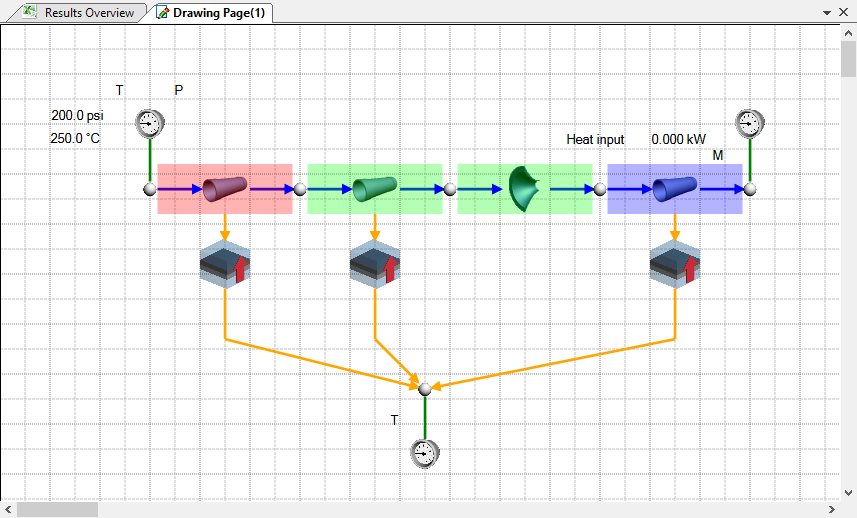
In this example I have a two-phase water network with a cold external temperature. I want to create a result layer to quickly see if the water is in the gas phase, liquid phase, or somewhere in-between. The problem I have been tasked with solving is ensuring that the water never condenses. I will need to determine where we may need to add additional heat flux to the network.

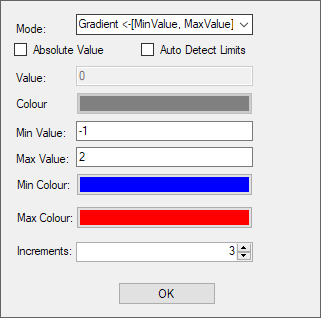
We can use the Quality result property to determine the phase of our fluid. Quality < 0 indicates fully liquid, quality between 0 and 1 indicates liquid/gas mixture, greater than 1 indicates fully vapor.

To make this work as intended I can set up a gradient with three increments going from -1 to 2. The idea being the lowest increment would encompass -1 to 0, middle increment would be 0 to 1, and the top increment would be 1 to 2. For the gradient mode I made sure to pick <-[MinValue, MaxValue]-> so that the max and min increments would extend past the specified range.

As we apply this to our network we can easily see that we do, in fact, have a phase change from gas at the inlet, to mixture in the second two component, to fully liquid near the outlet.

I may decide to add a heater to our outlet pipe and perhaps a thicker insulative layer to all three to attempt to keep the water in gas phase throughout the system.

Bonus Tip!

  • Result layers can also be super handy when troubleshooting to quickly identify large pressure differentials, choking points, or other outlying fluid properties.

Input Sheet Hacks in Flownex

Flownex Tech Tip #3

Building on last week’s global parameters example I’d like to show some tricks within the input sheet environment. These are really more so excel tricks – but the methodology within Flownex is slightly different. In this example I am working in Flownex Version 8.12.7.4334

Refresher on using Input Sheets

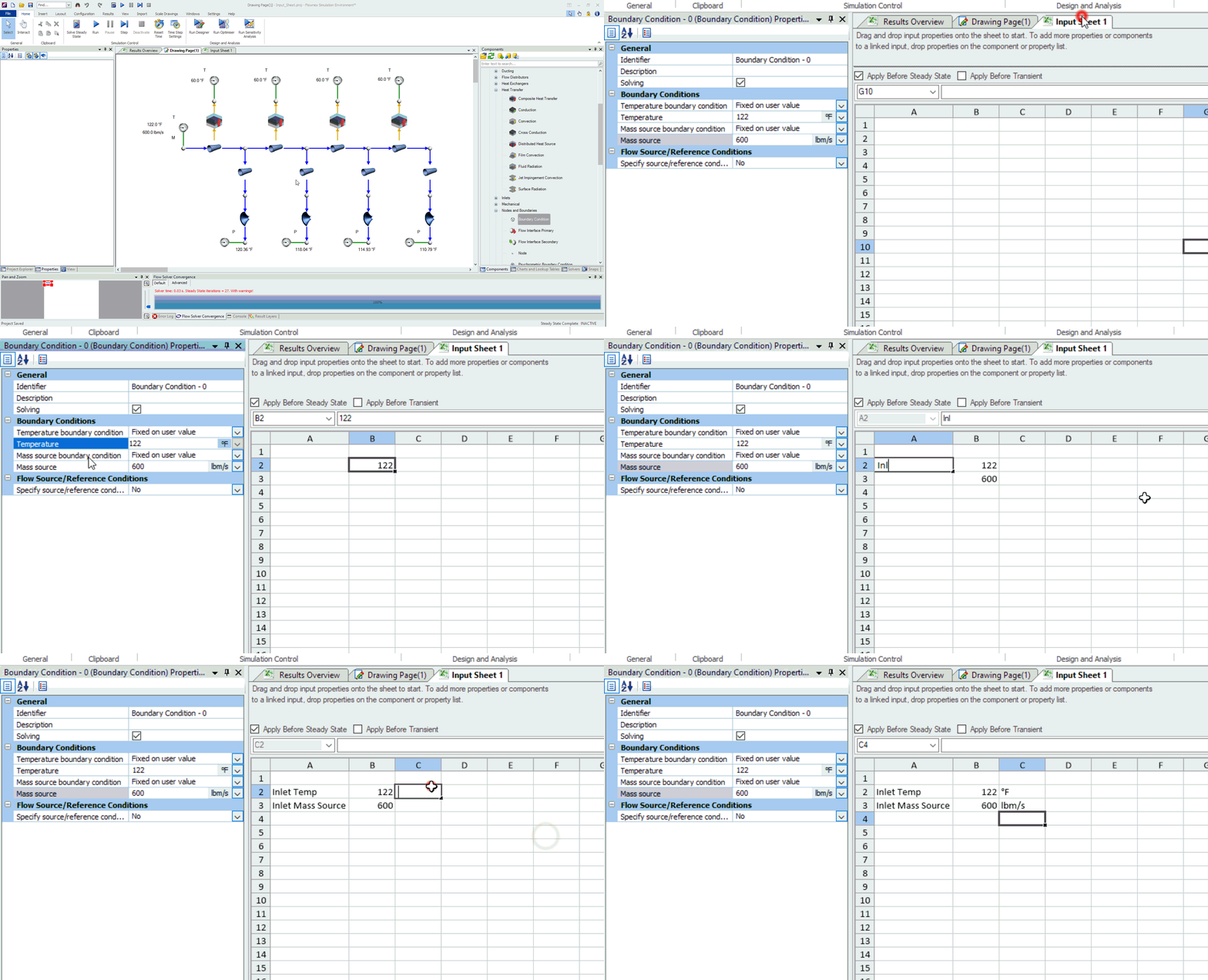
To create a new Input Sheet we will navigate to the project tab, then select “Excel Reports/Pages”, right-click on the Input Sheets folder, and select “New Input Sheet”

To add inputs to the sheet it’s as simple as dragging and dropping the inputs from the component into the desired cell in the Input Sheet.

Formatting our Input Sheet

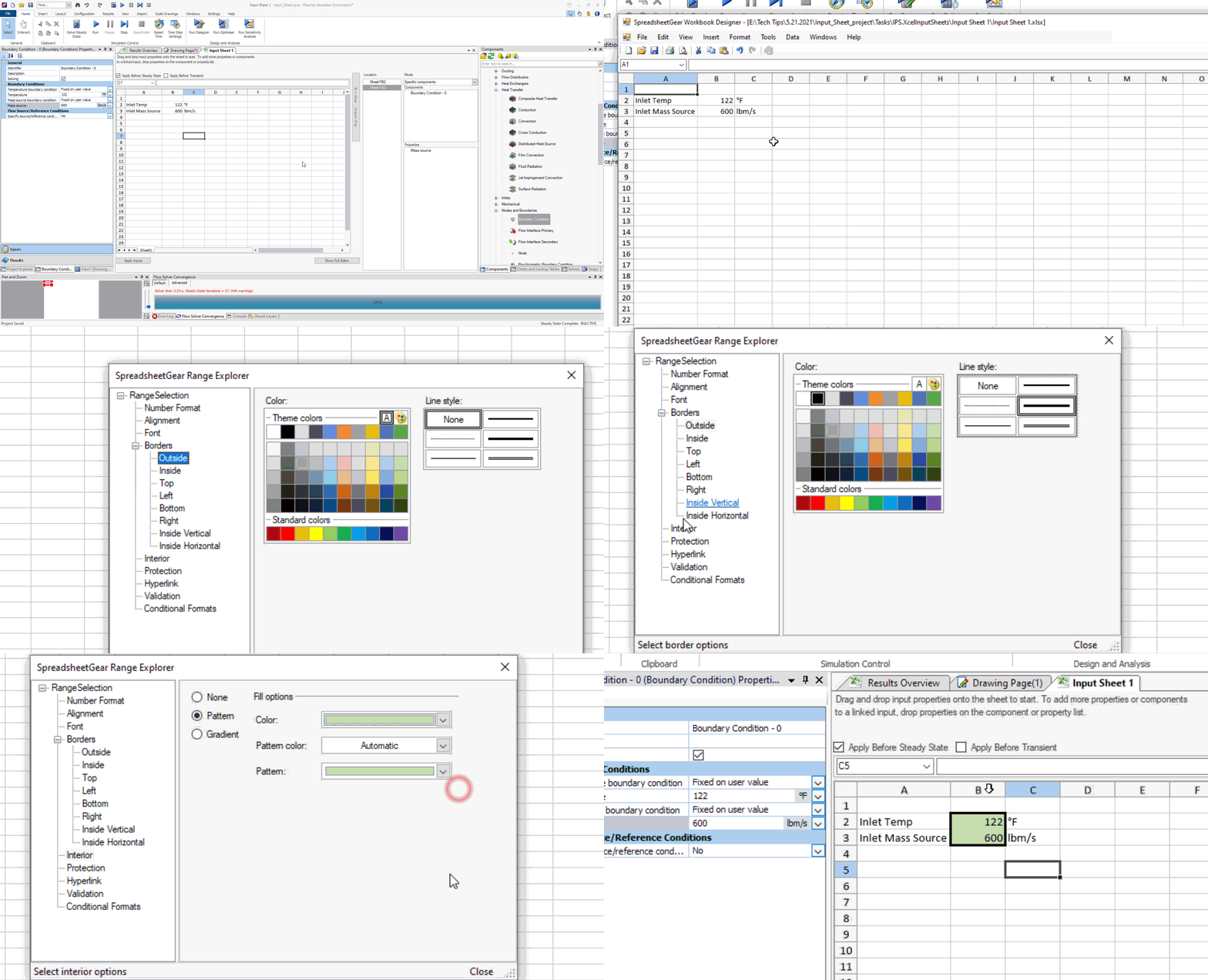
I like to use color, shading, and border to specify which cells contain inputs so that if I pass the project off to a client or colleague it is immediately clear what variables they should be editing and which cells they shouldn’t change.

To modify the formatting we need to enter “workbook designer”. This is done by right-clicking on the input sheet and selecting “workbook designer”

All of the standard Excel-type formatting is available here, including adding graphs, images, etc. Typical operations are found in the format menu on the top ribbon.

Drop Downs

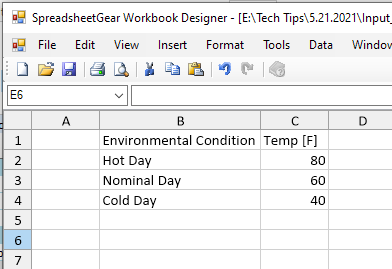
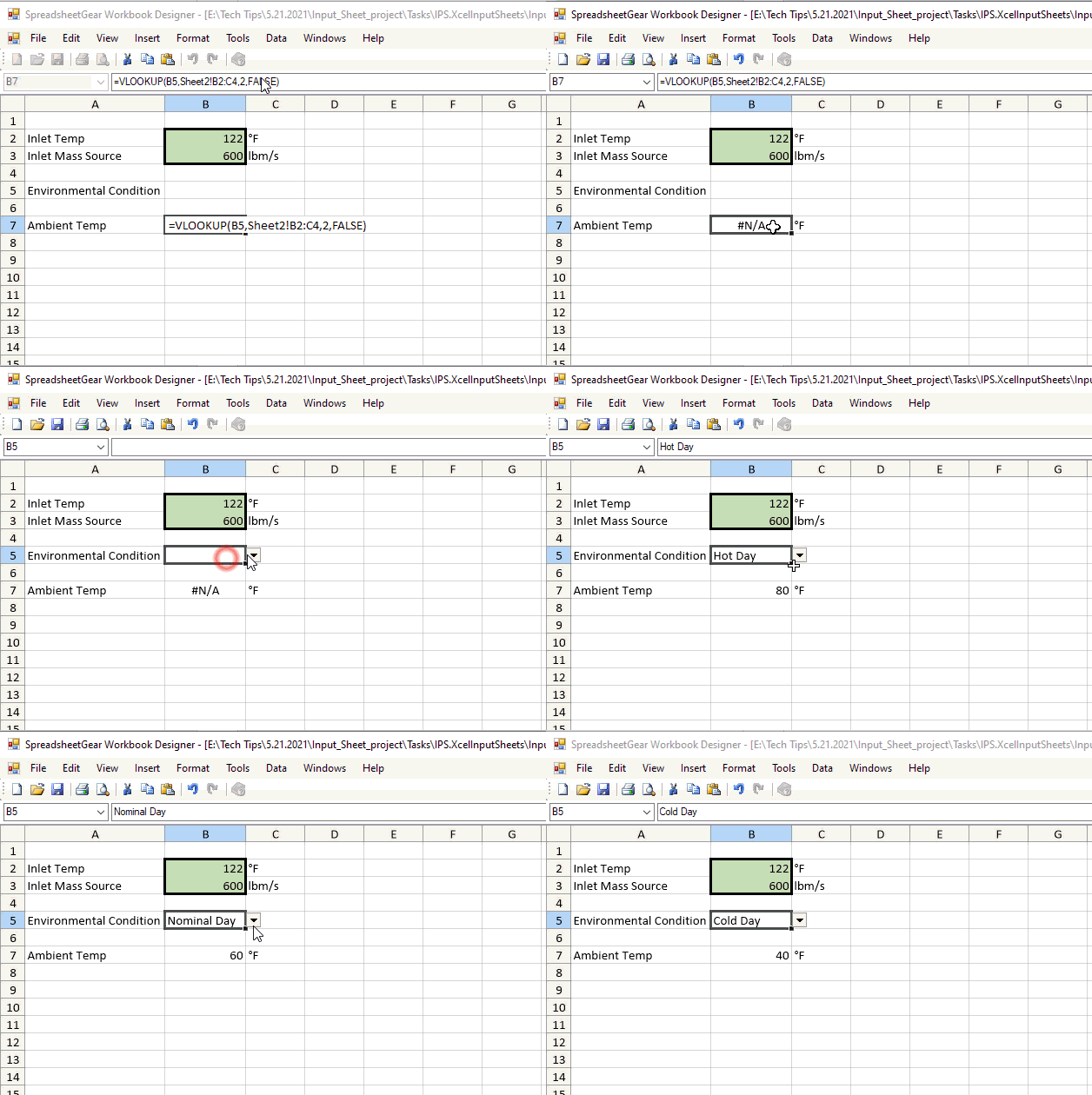
A more advanced Excel operation I like to integrate into these types of input sheets is a drop-down where multiple inputs may be tied to a given condition. In the example below I set up a scenario for given ambient temperature for cold day, hot day, and nominal day.

In the workbook designer we will click “insert” > “worksheet” and build our list of environmental conditions. On the right we will set the associated temperatures.

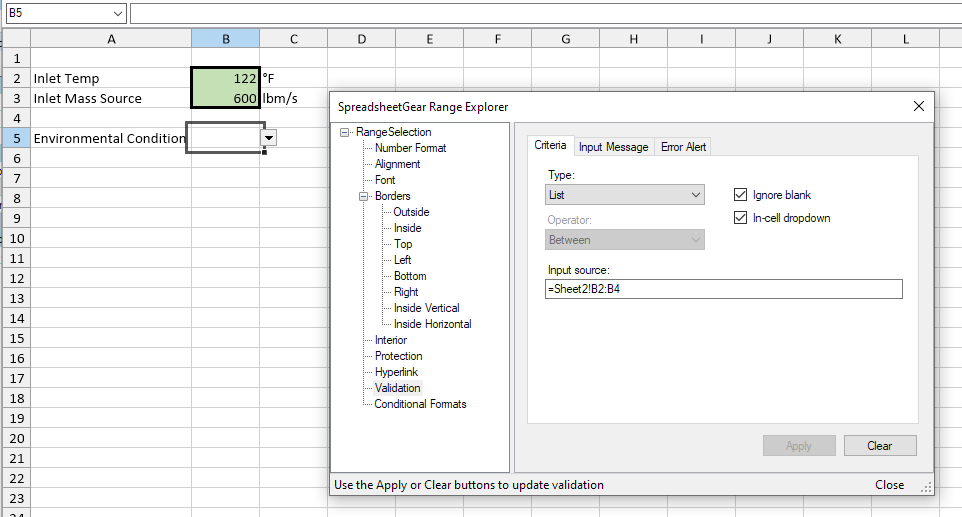
Back on Sheet1 we will need to set up the data validation cell reference to this table. Select the cell where we want to add the dropdown and go to data > validation. We will choose list, and reference cells B2:B4 of Sheet2.

We will need to use VLOOKUP to associate the temp to another cell based on this dropdown. Where this becomes valuable is when we have many input variables tied to each of the dropdown selections.

In this example, since we’ve put the applicable temps a single column to the right the syntax for VLOOKUP will be “=VLOOKUP(B5,Sheet2!B2:C4,2,FALSE)”. After this is added it should behave as follows:

As I mentioned before, this trick becomes very powerful when you have many different environmental or operational inputs tied to a single “scenario” that you want to model in an individual run rather than in a parameter study.

Bonus Tip!

  • All of these tricks can be applied to any of the excel-type sheets within Flownex. Remember to be careful with parameter tables as the inputs and results are tied to the columns instead of individual cells.

Working with Global Parameters in Flownex!

Flownex Tech Tip #2

As we build more and more networks it quickly becomes tedious to enter in the same inputs many times. There are a couple methods of using global parameters to save us lots of time and clicks. In this example I am working in Flownex Version 8.12.7.4334

Refresher on Global Parameters

Global parameters are just what they sound like. Parameters defined globally for the project. These could be any type of component input; diameter, length, temp, pressure, etc.

The global parameters can be found in a couple of locations. Under the configuration ribbon we can open the global parameters in a floating window which gives us a friendly interface for creating or modifying these parameters. To create a global parameter one may simply right-click in the GlobalParameters window and select Add (hint: there’s a better way!).

Conventional method to add Global Parameter

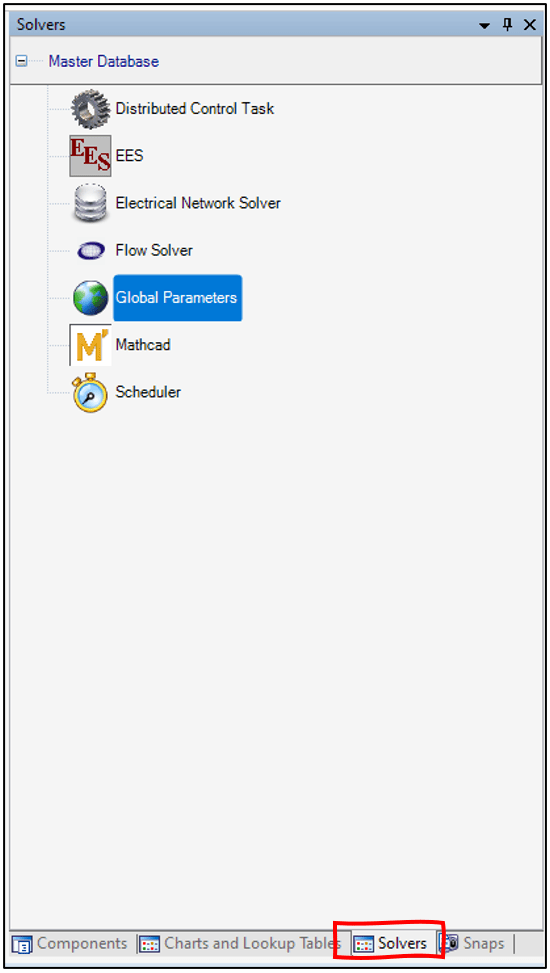
Global parameters can also be accessed in via the solver tab in a similar way to typical inputs (this is important later on).

The Quick way to add Global Parameters

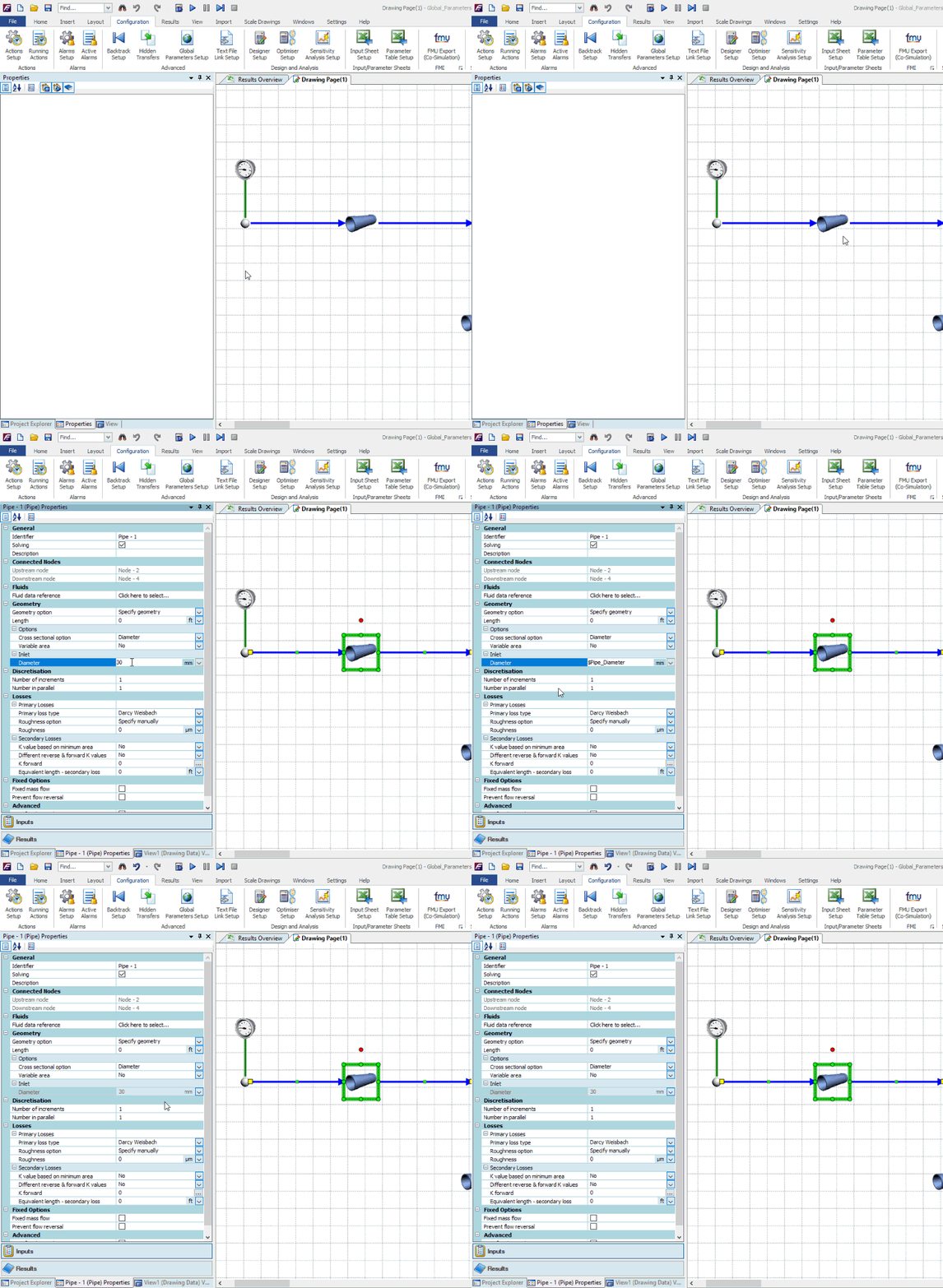
We don’t really want to have to navigate to that configuration ribbon, right-click a bunch, choose names and assign units do we? Good news! There is a much faster way to add a global parameter. We can add a global parameter with minimal work by simply typing a dollar sign “$” prefacing the name of the tag in any of our component input fields! Remember to hit enter after typing the identifier.

Global Parameter Shortcut

Once a global parameter has been defined we can tie more inputs to the existing parameter by typing the dollar sign “$” and choosing the correct parameter from a drop down:

Multi-Assign Global Parameters

As you can see, this can be quite a time saver when building a network! The next trick utilizing global parameters will have to do with using them for actual analysis.

Using Global Parameters as Manipulatable Inputs

The default/slow way to change a global parameter would be to go to the configuration ribbon > global parameters, and manually change the value in the floating window. No thanks. This is not automated at all and requires many clicks.

The better way to utilize the global parameter as an input would be to tie the global parameter to an input sheet, parameter table (for a parametric study), or even a human machine interface component (HMI).

Global Parameters in Input Sheet

For a design variable that an analyst or engineer may change which would then remain constant (such as pipe diameter) the input sheet comes in very handy. To reference a global parameter in the input sheet recall the second method to access the global parameters and then simply drag and drop onto the input sheet:

Global Parameter in Input Sheet

Global Parameters in Parameter Table

If you are trying to run a parametric study where you are varying something like ambient temperature, it makes sense to use a global parameter as you may have many boundary conditions defined by a single global parameter. Similar to the input sheet this can be tied to a global parameter by a simple drag and drop operation:

Global Parameter as variable in Parameter Table

Global Parameter in a Human Machine Interface

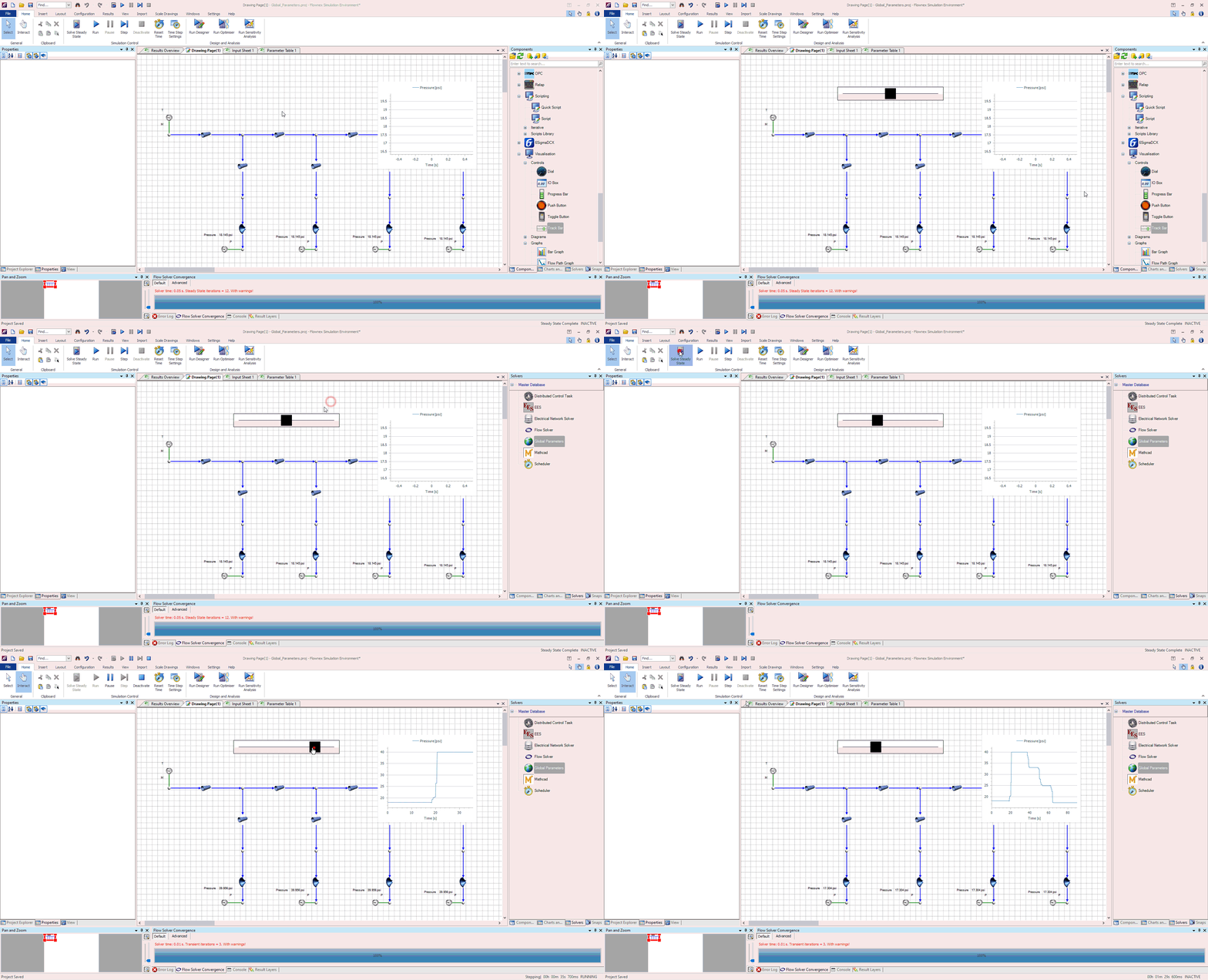
By now I expect you are catching on. The trick to defining a global parameter externally is to use the second method; solver tab > global parameters, and then drag and drop to your desired connection. In the HMI instance I’ve tied inlet mass flow to a Track Bar so that a user can dynamically change the flow rate during the solve:

Global Parameter tied to HMI
Global Parameters and HMI components

Global Parameters are efficient and POWERFUL

We can use global parameters during network construction using the “$” shortcut to build our networks much more quickly and keep identical inputs the same. We can tie these global parameters to other tools to keep our user inputs all in one place, reducing clicks, and reducing the chance of forgetting to update an input.

Bonus Tips!

  • Global Parameters can also be used in Designer so that you can keep your independent to dependent variable count the same (EX: Adjusting ALL pipe diameters to target a single exit flowrate)
  • Global Parameters can be adjusted via transient actions (EX: Adjusting ambient temperature to model the changing temperature over the course of 24 hours).

Adding a Background Image in Flownex

I’m going to attempt to write a recurring blog post on Fridays with tips and tricks in Flownex that I have discovered over the years. This post will be the first of many! If you enjoy please subscribe.

Flownex Tech Tip #1

In this post I will go over what is usually the first step in any network I build. Adding a background image not only helps me lay out my network but also helps colleagues and clients understand networks at a very quick glance. In this example I am using Flownex version 8.12.7.4334

Choosing an Appropriate Image

The first thing we want to do is to make sure that the image size is such that it’s reasonable in size both resolution-wise (so it doesn’t appear pixelated), and right-size so that components don’t appear too small when placed on top. I recommend something in the multi-thousands of pixels both in width an height. 3000 pixels at a minimum. I usually shoot for around 10,000 wide by 5,000 high if the background image will be landscape. For very complex, large networks, it may make sense to go much larger.

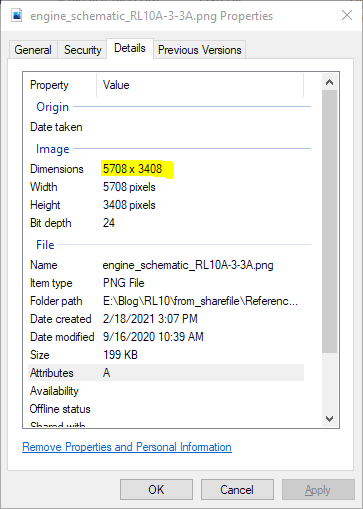
Once we’ve found an appropriate image we will want to make a note of the exact size. This can be found by right-clicking on the image file, selecting properties, and navigating to the details tab.

Confirming Image Resolution

Resizing Flownex Canvas

The canvas in Flownex can be resized to match this resolution by right-clicking on the canvas, selecting edit page, and populating the correct inputs:

Editing Canvas Inputs

Applying Background Image

The background image can be applied by clicking the radio button next to Style in the Appearance subcategory. Here we will change the Fill Style type to Image, then click the Select Image button:

Styles Editor

The images saved locally to this project will appear here. To add an image we simply click Add Image, navigate to the image of our choice, and click open. Now that it is available as an option we select the image in the Image Selector Gallery and click OK.

Image Selector Gallery

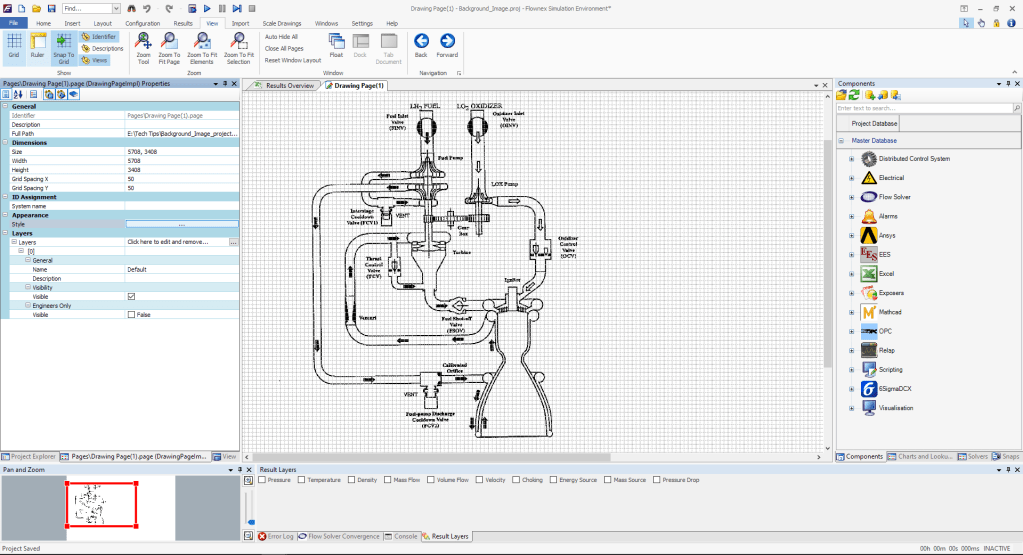
We can press OK in the Styles Editor to confirm our changes and we should now see our added image as the new background!

Drawing Canvas with Background Image

Bonus Tips!

  • Adjusting the Fill Style opacity can fade out the background image so that it doesn’t overwhelm the Flownex components placed on top.
  • Turning off the grid under the View ribbon can make the canvas a bit more aesthetically pleasing and makes it easier to read text on the background image.

Building a System Model of the RL-10 Rocket Engine in Flownex

When we engineers are building a new system or iterating on an existing design it can be expensive.  Simulating a full system level model in a 3D CFD program can take days.  Making iterative changes to an existing system can be costly or even impossible. Utilizing a one-dimensional system modeler like Flownex allows us to analyze many different designs very quickly, on the order of seconds or minutes.

Flownex is a thermal-fluid network modeler.  It is a simulation tool that allows for 1D fluid modeling and 2D heat transfer.  It uses a variety of flow components, nodes, and heat transfer elements to model the entire system we are interested in analyzing.  It solves conservation of mass, momentum, and energy to obtain the mass flow, pressure, and temperature of fluids and solids throughout the complete network.  Because of this approach we can analyze large, complex networks very quickly, iterate on designs, and even run short or long transient simulations with ease.

In the example today we are looking at a version of the RL-10 rocket engine, which has been a staple in the delivery of satellites into orbit and an essential part of many spacecraft. The specific iteration of the RL-10 we will be using for building our network model is the RL10A-3-3A. A good place to begin with any system model is a system schematic:

Figure 2: RL10A-3-3A Engine System Schematic – Image from https://ntrs.nasa.gov/citations/19970010379

In Flownex we can assign an image (could be from a P&ID diagram, a CAD cross-section, or even a satellite image!) as the background for our drawing canvas. We simply need to right-click on the drawing canvas and select Edit Page to bring up the drawing canvas properties.

Clicking on the action button under Appearance > Style brings up the Styles Editor.  Here we can change the fill style to Image and select the appropriate image for our background.

In the case of the RL-10 we can use the image from figure 2 as our background image.  We may want to consider adjusting the opacity of the image so that it blends into the background a little bit more.

In Flownex building a system model is as simple as drag and drop.  We can build our rocket engine using a variety of flow components from the Flow Solver library. To build the RL-10 system model we will be using the following components:

CEA Adiabatic Flame component to model combustion.

Composite Heat Transfer component to model thermal transport through pipe-walls to ambient and to model the regen.

Boundary Conditions to constrain our system at the inlets and outlet.

Basic Valves to model the different valves in the system,

Flow Resistances to model specified losses where appropriate.

Flow Interfaces to model the fluids entering the combustion chamber (to transfer fluid properties as we switch from two-phase O2 and H2 to gaseous fluids for modeling combustion.

Pipes for modeling various flow-paths.

Restrictors with Discharge Coefficient for our injection ports to the combustion chamber.

Restrictors with Loss Coefficient to model both the Calibrated Orifice and the Venturi contraction/expansion.

Basic Centrifugal Pumps for our Fuel and LOX pumps.

Simple Turbine to model the Fuel Turbine

Shafts to connect our different pumps mechanically.

Gearbox is used to connect the shafts between the LOX pump and the Fuel Pump.

Exit Thrust Nozzle to determine total thrust.

A Script is used in assigning O2 properties prior to combustion.

The components may be dragged and dropped from the component library onto the drawing canvas to build our system model. We can also copy and paste components that are already on the canvas into different locations. This can be especially useful when the same inputs for say, a pipe, are used consistently throughout the model. All components have both Inputs and a Results associated with them as seen in the figure below. This is how we will define our flow components.

The completed model of the RL-10 Rocket Engine can be seen below. There are a few simplifications; we are using composite heat transfer components to model free convection to a specified ambient temperature (as though this was a land-based test). Rather than tie the actual temperatures and flow conditions in the nozzle to the regen we are using assumed temperatures and convective heat transfer coefficients. For additional fidelity we could model the heat transfer between these two flow paths with calculated convective heat transfer coefficients and we could model cross-conduction along the pipes which deliver the fuel and oxidizer to the combustion chamber. With additional effort, more complex use cases could also be simulated.

For the sake of demonstration we set up a transient action to slowly vary the oxidizer control valve fraction open; starting at 30% and ending at 100% open and observer the change in thrust at the nozzle as a function of this changing transient action.

Plots may be easily added by dragging a Line Graph from the Visualization > Graphs section of the component library onto our canvas. To choose the characteristics we would like plotted against time we simply need to drag and drop the desired inputs or results onto our newly placed line graph.

RL-10 Transient Thrust Plot

We can plot both the oxidizer control valve fraction open and the thrust versus time to observe the thrust reaction to the opening of the valve. The thrust plot has some jumps that are likely due to numerical singularities – with additional work this could be improved.

As can be seen, setting up complex system models in Flownex is relatively simple with most operations being drag and drop. For ease of sharing models with colleagues or customers adding a background image makes it very easy to see how the flow components in the model correspond with a system schematic. Setting up and plotting the effects of operational transients is a breeze!

For more information on Flownex please reach out to Dan.Christensen@padtinc.com.